Category: Math for Grownups

  • Radiator Math: It’s all about the variables

    Photo courtesy of GeS

    Like most home-improvement projects, figuring out the size radiators that you’ll need for a room hinges on a formula — actually several formulas.  Install radiators that are too large, and you’ll burn up.  Too tiny radiators?  You’ll need that Snuggie that your Aunt Myrtle gave you for your birthday last year.  And those formulas depend on variables.

    What’s a variable you say?  Let me explain.

    For all you English majors out there, pay attention to the rootvary.  Yep, variables are things that vary or change.  So in a formula, the variables are those little letters.  And in many formulas — like the ones needed to calculate the number and size of the radiators in your house — there are lots of little letters.

    What are the variables that your radiator technician depends on?

    Think about the rooms in your house — some are small and some are large.  In other words the size of the rooms vary.  And any good radiator guy — like our friend Frank — will tell you that the size of a room determines the size of the radiator you need.  Small room? Small radiator.  Huge room? Probably more than one good-sized radiator.

    So, guess what?  Your old friend the volume formula plays a role.

    V = lwh

    where V = volume, l = length, w = width and = height

    (See those variables? Length, width, height?  They’re pretty simple to figure out in a room with rectangular walls, floor and ceiling.)

    But there are more variables to consider.  Typically, you want your bedroom and hallways to be a little cooler than your kitchen and family room.  So the kind of room that you’re heating will be another variable.

    And rooms with lots of windows and doors — or houses with poor insulation — will lose more heat.  Yep, more variables to consider.

    Things are getting pretty darned complicated around here.

    This is why most radiator technicians often use an online or computer program calculator to determine the size of the radiators needed for each room of a house.

    But if you’re renovating an old house, like I am (and your name isn’t Bob Vila), you won’t likely need to find the BTU/hr needed to heat your dining room or the size of the radiator you need for your newly restored downstairs powder room.  But knowing a little bit about the math that goes into the process can help you feel confident about the work your radiator guy is doing.

    Besides, thinking of radiator heat is a good way to describe variables.  Especially in November.

    When have you used variables to work out a home-improvement problem? Share your ideas in the comments section.

  • Watch Your Language (And Your T-Shirts)

    Earlier this year,

    This Forever 21 shirt is no longer available. (Thank goodness!)

    Forever 21 and J.C. Penny had problems with moms and teen girls, when they retailed their own versions of math-as-gender-warfare–t-shirts that read: Allergic to Algebra and I’m Too Pretty for Homework, So My Brother Does It for Me.  Within days, the shirts disappeared from the shelves and their websites.

    I wrote a guest blog post about this for Dara Chadwick’s wonderful blog You’d Be So Pretty If, which is devoted to encouraging positive body image in girls.

    I was a great high school student. I did well in all of my classes (Okay, so I did fail band that one grading period because I didn’t turn in my practice sheets.). I was a responsible and eager student. But there was one subject that was a challenge for me: French.

    I tried. I really did. But for whatever reason, the most romantic of all of the romance languages did not come easy. I had good teachers. I studied. I paid attention in class.  But the best I could do was a low B — and that was with a lot of hard work.

    Still, I didn’t have a t-shirt that read, “French Phobic.” I’ve never heard of a Barbie doll that says, “French is Hard!”

    So what’s the deal with math?

    Math is hard. But so is writing, reading, playing an instrument, painting, soccer, woodshop and, yes, French. In fact, if teachers and coaches are doing their jobs, students will feel challenged — which can bring up a variety of other feelings, from frustration to enthusiasm.

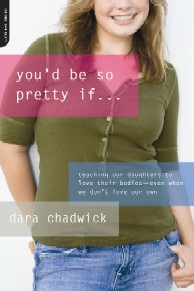
    You’d Be So Pretty If… by Dara Chadwick.

    Read the rest here, and be sure to comment.  Also, check our Dara’s wonderful book You’d Be So Pretty If…  Anyone who knows a teenage girl should!

    So what do you think about these t-shirts?  Are they all in fun or bad for girls?  Why does math get such a bad rap?  Share your ideas in the comments section.

  • Math at Work Monday: Frank the radiator guy

    Photo courtesy of roland

    Let’s face it.  We take our heat for granted.  Unless you’ve been without heat for long enough that the charm of it all wears off, you just plain don’t notice that your house is toasty warm.  And if you have radiators, you can thank “the radiator guy” for that.  

    I’ve always lived in old house.  (Well, except for those years right after college when I rented circa-1970s townhouses.)  And that means I’ve depended on radiators to keep me warm in winter months.  I love radiators.  Giving up some wall space is worth the even, constant heat.  But until I started renovating my current house, I didn’t understand the calculations required to plan for the right size and number of radiators in a room.

    Along came Frank “Steamhead” Wilsey — who has been our “radiator guy” since we moved to Baltimore.  He may not like math, but he does use it in his job.

    Can you explain what you do for a living?

    I install, service, modify and repair steam, vapor and hot-water heating systems.

    When do you use basic math in your job?

    I use math for many things–accounting, invoicing, heat-loss calculations, radiator sizes and total amounts, flow rates, pressure drops, pipe and pump sizes and capacities. They’re almost all basic arithmetic- addition, subtraction, multiplication, division.

    Do you use any technology to help with this math?

    Yes, we use calculators and computers for a good part of it. Accounting and heat-loss calculationprograms save a lot of time, since they store a lot of things we commonly use so we don’t have to memorize them or look them up every time- such as heat transmission factors for various building materials and combinations thereof. Other things, like pump performance curves and oil burner nozzle capacities at different pressures are shown in charts that we keep with us.

    These technologies help us work faster and more accurately. For example, most times our accountant doesn’t even have to come to our office- we just e-mail her the proper file. But we try to do the basic stuff in our heads, so we don’t lost the ability.

    How do you think math helps you do your job better?

    It helps us avoid guessing. It’s way too easy to guess wrong!

    How comfortable with math do you feel?

    I’ve never really been comfortable with math, but it’s part of my toolkit.

    What kind of math did you take in high school?

    I took some algebra, consumer math and I think some business types of math. Again, it wasn’t my best subject.

    Did you have to learn new skills in order to do this math?

    Mostly, I had to re-discover things that I forgot I’d learned in school.

    So there you go.  The simple quest of warmth requires some kind of math.  Have questions for Frank?  Ask them in the comments section.  And stay tuned to Math for Grownups for more about the math involved in winter heating.

  • Math at Work Special Edition: Alison the shop owner

    Math at Work Special Edition: Alison the shop owner

    It’s November, which means it’s time for me to start thinking about the upcoming holidays.  I love to buy gifts, but I hate to shop.  So I spend a lot of time thinking about what I want to buy and only a little bit of time in the shops that I love.  

    Like A. Dodson’s.  Shopping at locally-owned stores is a priority of mine.  I like supporting small businesses and keeping my money local.  Plus, so many local shops have quirky, carefully-selected merchandise that appeals to me.  It’s like Etsy offline.  

    So I’m so excited to have Alison Dodson Anderson, proprietor of A. Dodson’s in Suffolk, Virginia.  She’s the head honcho over there and uses math to run the business–and make sure that picky shoppers like me see something they want to buy.

    Can you explain what you do for a living?

    I own an independent retail shop, A. Dodson’s. We sell an eclectic selection of clothinghome accentsand gifts.

    When do you use basic math in your job?

    I use math every. single. day! Although managing the creative aspects of A. Dodson’s feeds my soul, running the numbers and tracking our growth is something I am constantly doing. I use multiplication, percentages and basic business math to determine how much to price an item, how many items to order and to calculate my margins. There is a strategy behind every move we make and that strategy is created using math.

    Do you use any technology to help with this math?

    I do a lot in my head, but for data entry I rely on the computer to calculate margins not only on each product but within each department like accessories, gifts, apparel and home.

    How do you think math helps you do your job better?

    It helps me track what’s being sold, it helps me know my “open to buy” for next season, it helps me see my best sellers and know whether to buy 24 or 48 for next season.

    It also helps my employees know what’s expected of them. Each day we review the numbers. We look at what the shop earned on that particular day for the last three years and then we establish a Goal and a Stretch for the day. The goal is generally a 10% increase over the year before and the Stretch is generally a 20% increase over the year before. At the end of each day, we post our numbers so we can see how we did. Additionally, each week we have a staff meeting to review our month-to-date and year-to-date performance. I believe everyone on staff, including the interns, should know exactly where we stand so they can feel empowered.

    How comfortable with math do you feel?

    I used to think I was a “math person,” but then I married a financial advisor. Compared to the math he can do so effortlessly, I don’t feel as much like a math person as I did. But I am completely comfortable with performing the kind of math that helps me run a successful business. Although creativity feeds my soul, math drives it!

    What kind of math did you take in high school?

    I took geometry, trigonometry, algebra and calculus. I was good at it, and I enjoyed learning it.

    Did you have to learn new skills in order to do the math you use in your job?

    My math foundation was earned at school, but I’ve learned how to use specific math skills to operate my business. For example, I may not have specifically learned in school that I must operate at XYZ margin in order to grow my business, but I learned in school the math required to calculate my margins.

    If you are going to operate a retail business, you must know your numbers inside and out. You must always be running your numbers when you’re buying and when you’re selling. When I’m buying from a vendor, I’m looking at shipping costs and incentives because every little thing affects my margin and determines my resale, which ultimately determines A. Dodson’s success.

    If you’re in the Hampton Roads area this weekend, be sure to stop by A. Dodson’s for their annual holiday open house.  And if you have questions for Alison, ask them in the comments section!  

  • Nesting in November

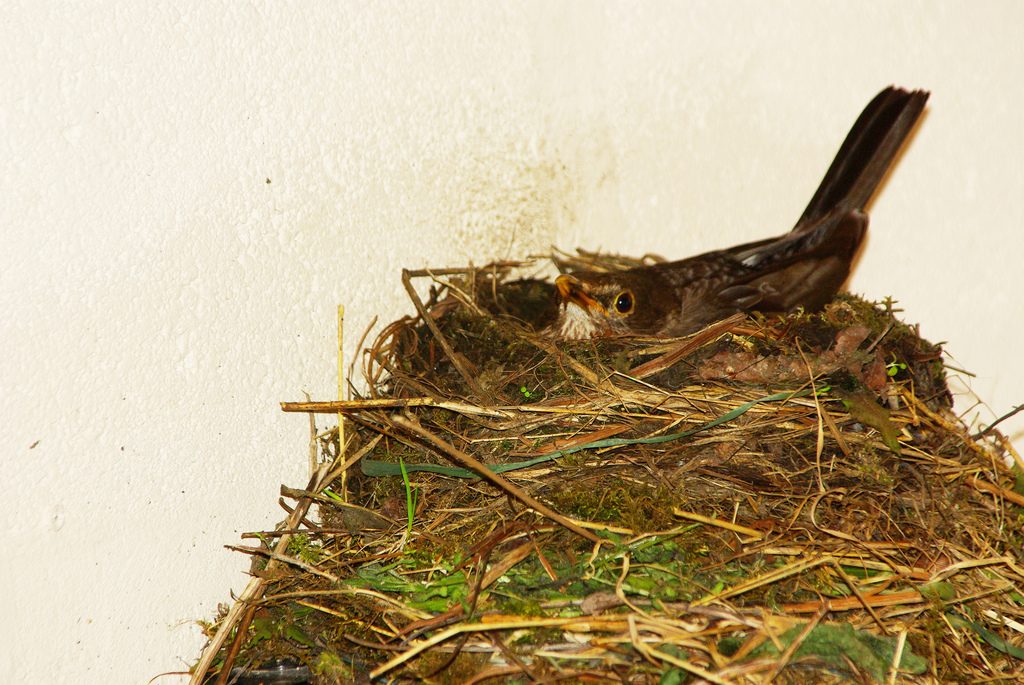
    Photo courtesy of jack_spellingbacon

    I don’t know about everyone else, but by the time November rolls around, I’m ready to cuddle up in my house and focus internally for a while.  That doesn’t mean that I forget about my friends or never set foot in my front yard.  But I do tend to be drawn to little crafts and DIY projects.

    So all month, I’m going to share some ways that I feather my nest before launching into full holiday mode in December.  Of course all of these ideas and projects will have some kind of math angle to them — because if you haven’t figured it out yet, math is everywhere!

    I thought I’d start out today showing you how I combine geometry and my crochet needle.

    This time of year, I love to crochet.  Not only is it a great way to pass the time indoors, but as I crochet a blanket, it warms up my lap!  There’s lots and lots of counting involved, but I’m a sloppy and lazy crocheter.  So instead of counting rows, I depend on geometry to help me figure out how close I am to being finished.

    This little trick is pretty much how carpenters can tell if their walls are square.  But with fibers–yarn or fabric–it’s even easier, because all you have to do is fold.  (Folding a deck is darned near impossible.)

    Usually the little dishtowels I make are squares.  I don’t use a pattern, so to check my progress I fold the top edge to meet one of the side edges.  If I get a perfect triangle, I have a square.

    This dishtowel is a square. (Okay, cut me a little slack — it’s been used and washed a few times!)

    Ta-da! When I folded the bottom edge to meet the right edge, I get a (somewhat) perfect triangle.

    But if I fold along the diagonal and I don’t get a triangle, I know the dishtowel is rectangular.

    This dishtowel is a rectangle. (Sort of.)

    See! When you try to make a triangle, the edges don’t match up.

    Why does this work this way?  Basically, it comes down to the Pythagorean Theorem, but in all honesty, you don’t need to know that.  Just remember that if you fold a square along its diagonal, you’ll get a right triangle with two equal sides.

    How has your basic understanding of geometry helped you with a project?  Share your story in the comments section.

    And come back tomorrow for a special edition of Math at Work and on Friday for a great nesting project that will put you in the giving mood!

  • Film Friday: Last dance

    Photo courtesy of luca pedrotti

    As I announced earlier this week, I’m retiring Film Friday.  While I had a lot of fun looking for videos to share with you, the posts didn’t get a lot of traffic.  Remembering that insanity is doing the same thing over and over again while expecting different results, I’ve decided to get off this merry-go-round.

    That doesn’t mean I’ll never include videos again.  In fact, I’d like to do video posts where I’m actually on screen to teach you a few things.  But for now, I’m taking a different route.  (Get the details here.)

    So for today, we bid adieu to Film Friday here at Math for Grownups.  And as a parting gift, I share my favorite videos with you!

    This video is so gorgeous.  I could watch it over and over again. (And I have.)

    Ursus Wehrli is both infuriatingly precise and hilarious.

    Do you remember the difference between the deficit and the debt ceiling?

  • Ch-ch-ch-changes

    Now that’s bored! (Photo courtesy of CoreForce)

    I’m bored with my blog.

    There.  I said it.  And I think some of you feel the same way.  I don’t blame you.

    While I think we’ve gotten off to a good start here at Math for Grownups, I also think it’s time to shake things up.  There are so many more opportunities to show you how you use math in everyday life — and perhaps teach you some new tricks.

    So starting on November 2, there are going to be some changes around here.  Good changes.

    I’m keeping what’s working (Math at Work Monday) and chucking what isn’t (Film Friday).  I’m also shifting my posting schedule a little. Instead of posting on Mondays, Thursdays and Fridays, I’ll post on Mondays, Wednesdays and Fridays.

    Plus, I’m introducing monthly themes.  Not only will this help me come up with great, timely ideas, but it’ll also tap into things that you are probably already wondering about.  Here’s a taste:

    • November is for Nesting: As the seasons change (for some of us), we turn our thoughts to cozying up our home and spending time with family.
    • December is for Holidays: Whether you celebrate religious or secular holidays, there’s a festive buzz in the air.
    • January is for Resolutions: Even if you don’t make New Year’s resolutions, starting something fresh is probably on your mind.

    You can still visit on Mondays to see how ordinary folks use ordinary math in their ordinary jobs.  But now my interviews will follow that month’s theme.  So in November, you can expect to meet folks who help you transition into winter or focus more on home: a radiator technician, a landscaper, a fabric designer and a chef.

    On Wednesdays, I’ll post about the math used in these fields.  For example, I may teach you how to figure out if your heating bill is accurate or show you the math of winterizing your windows.  Or I may investigate how ratios are used by chefs.

    And on Fridays, I’ll be scouring the internet and my brain for projects.  I might show you how to build radiator covers or sew new curtains or how to be sure the turkey comes out of the oven perfectly cooked.  Of course these projects will involve a little math.

    Oh, and in November or December, I’ll roll out a new design for the blog.  Yay!

    This is your chance to make requests. (Okay, it’s not your only chance.  You can always tell me what you think.)  If you’ve been waiting to see a job profiled or learn about something that’s always bugged you, post in the comments section.  These can be monthly theme ideas, projects or general math concepts that you’d like me to illuminate for you.  I promise I’ll take everyone’s thoughts into consideration.

    And I’m always looking for folks to interview for Math at Work Mondays.  Right now, I’m on the prowl for a chef, a landscaper and a candle maker.  (Not a butcher, a baker, a candlestick maker — but pretty darned close!) Feel free to email me with your ideas or post in the comments section.

    Ah… not bored any more!

  • Math at Work Monday: Brette the cookbook author

    I like to cook and bake (especially pies and bread), but the idea of developing a recipe that others can use makes my hands sweat.  To be honest, I don’t really understand the difference between baking soda and baking powder (except that soda interacts with vinegar in a really cool way), and figuring out how long to keep something in the oven — and at what temperature — is a mystery to me.

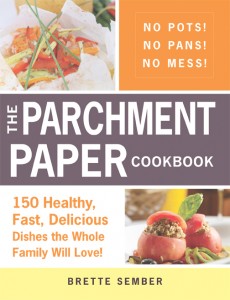
    So when my friend and fellow writer, Brette Sember let me know that she has a cookbook coming out, I jumped at the chance to feature her here.  It should be no surprise that math is a critical ingredient of all recipes.  The Parchment Paper Cookbook is no exception.  Her recipes offer easy ways to cook healthy meals without pots or pans. You can get a taste of her recipes at her blog: No Pot Cooking.

    What do you do for a living?

    I write books, blogs, and articles, and I also do indexing, ghostwriting, and copyediting.  One of my specialties is recipe development and food writing.

    When do you use basic math in your job?

    I have one cookbook out, The Parchment Paper Cookbook, and The Muffin Tin Cookbook is on the way. I’m finding there is a lot more math involved in writing cookbooks than I expected! When I was just cooking for my family I did a lot of dumping of ingredients, but now that I have to record my recipes, I have to do a lot of measuring. And I also have to do a lot of conversions of measurements.

    Test recipes are much smaller than the ones I publish in my cookbooks.  So, after testing a recipe, I have to convert the ingredient amounts for publication. This gets a little complicated when you’re dealing with teaspoons and tablespoons.  For example, if make a test recipe with 3 tablespoons of an ingredient and I want to quadruple that to make a full batch, I would multiply by 4 to get 12 tablespoons. But I have to express that as ¾ cup.

    Do you use any technology to help with this math?

    Yes definitely. I don’t trust myself to get it right, and it absolutely has got to be accurate.

    How do you think math helps you do your job better?

    I’m able to give readers the most convenient measurement possible for them.

    How comfortable with math do you feel?

    I have to admit I don’t feel very comfortable with math. This is kind of funny because from 7th to 11thgrade I was in a special gifted math program where I went to the local university for math with kids from other school districts in my county. We learned a creative approach to math. Regardless, I never felt comfortable with math. So, no, I guess I would say I don’t enjoy the math aspect, but it’s essential to what I’m doing so I am careful to do it right.

    Did you like the math you took in high school?

    I got great grades until I took a traditional calculus class with college students in 11th grade. I got a D! I dropped out of the program then. I didn’t have to take math in college, because I had earned so many credits through that program.

    Did you have to learn new skills in order to do this math?

    It is pretty basic, but I had to refresh my memory for some of the conversions.

    Thanks, Brette, for appearing in today’s Math at Work Monday.  Readers, if you have questions for Brette, feel free to post them below.  I’ll be sure to let her know and ask her to come by for a quick response.  And if you’re looking for a great holiday gift for someone who is too busy to cook and clean up, check out The Parchment Paper Cookbook.  Or pick up a copy for yourself!

  • It’s a contest!

    On Tuesday, I appeared on Midday with Dan Rodricks, an hour-long, call-in radio program on Baltimore’s WYPR.  At the top of the show, Dan asked listeners to solve a real-world math problem.  (Download the program here, to hear the entire show and what problem he offered.)  I was so surprised at the number of people who called or emailed in with their answers — they loved it!  So I thought I’d try it here on my blog.

    Welcome to my first Math for Grownups contest!  Here’s the background.

    Maybe you’ve seen this image on Facebook or somewhere else on the web:

    Get it? Funny, huh?

    There are so many different ways that this fellow could have represented $536.49, and I think this is one of the misunderstood beauties of math.  We were often taught that there is only one way to do a problem — but for the most part, there are many, many different ways to arrive at the correct answer.

    And that’s the beauty of being grownups.  We get to choose our own paths, right?

    And here are the contest deets:

    How would you have expressed $536.49?  Get creative.  Get complicated if you want.  The only catch is what you describe has to equal approximately $536.49 (in other words, rounded to the nearest 10th or cent).

    Here’s an example: (67 x 8 ) + (0.7)^2.  (^2 means “squared,” which I use because it’s not easy to use superscripts in these blog posts.)

    And here are the rules:

    1.  Post your response in the comments section here or on the Math for Grownups facebook page, by Monday, October 24 at midnight EDT.

    2.  Your response must be unique.  That means, you must read through the other responses before posting yours.  If there are two or more comments with the same correct response, I will accept only the first response.

    3.  You can respond up to five times.

    4. The winner will be chosen randomly from all of the correct responses.  (In other words, if your math doesn’t work out, your name will not be entered into the drawing.)

    5.  If you have five correct answers, your name will be entered five times.

    6. One winner will receive a signed copy of Math for Grownups and a Starbucks gift card valued at $[(4 x 2) – (8-10)].  (Figure that out!)

    7.  I will contact the winner for his or her address so that I can send out the gift card.

    Good luck!

  • Math at Work Monday: Mary Ellen the FBI profiler

    I have a confession to make: I’m so fascinated by the law enforcement agents who profile criminals.  Criminal Minds,Silence of the LambsSe7en–I could watch them over and over again.  And so I am so pleased to have a real, live FBI profiler here at Math for Grownups today.  In her book,Dangerous Instincts: How Fear Can Betray Us, Mary Ellen O’Toole, PhD, puts these experiences to work everyday life.  And today, she reveals how she uses math in her work.

    Can you explain what you do for a living?

    For half of my career, I worked in Quantico, at the FBI’s Behavioral Analysis Unit, the very unit that is the focus of the television show Criminal Minds. While there I tracked down, studied, and interviewed some of the world’s most infamous criminals, and I analyzed their crime scenes, too. These criminals included Gary Ridgeway (the Green River Killer), Ted Kaczynski (the Unabomber) and Derrick Todd Lee (the serial killer of Baton Rouge.) I worked everything from white-collar crime to work place and school violence to kidnappings to serial murder.

    Since my retirement in 2009, I’ve worked as a consultant to law enforcement, corporate security, administrators, and many other professionals. I also teach at the Smithsonian, FBI Academy and many other locations.

    When do you use basic math in your job?

    As I and other profilers worked to solve a crime, we used every type of math from basic addition to geometry and pattern analysis to statistics and probability to reasoning and logic.

    For instance, if I were working a serial murder case, I might study the age of the victims and the period of time that the crimes occurred to make a prediction about the killer’s age. Or my colleagues and I might place pins in a map to mark where all of the victims were last seen and where all of the bodies were found. We might use several different colored pins to then mark all of our suspects, tracing their movements and seeing what overlaps and what doesn’t. By doing this, we could sometimes narrow our suspect pool to just one or two people, as they were the only ones who could have been in all of the right places at the right times. We might also look at the map for patterns. These patterns might tell us where an offender is likely to leave his next victim or commit his next crime.

    Did you have to learn new skills in order to do this math? Or was it something that you could pick up using the skills you learned in school?

    I learned all of the basic math I needed to do my job while in school, but profiling itself requires a lot of analytical thinking, especially reasoning and logic. You get better at both of those over time and with experience.

    Math tends to have absolute answers. It’s usually more of a black and white field. It’s about finding the one number or answer. Profiling, on the hand, requires you to live in the gray area of human behavior. This can be difficult for people who prefer to have things more absolute. For instance, people like to mentally sort humans into neat little cells much like math cells. They want to think of one person as a psychopath, another as “crazy” and someone else as “kind.” But humans cannot be sorted into neat little cells.

    When you are talking about psychopaths—people who lack a conscience—people think you either are one or you aren’t. But this isn’t true. There are 20 traits and characteristics of psychopathy. Some people have a few of the traits, but not others. Other people have all of the traits, and they would be considered psychopaths. Still other people have most of the traits, but not a heavy dose of each one.  Psychopathy is dimensional, like blood pressure. All of us have blood pressure, when it gets high, you are diagnosed with “high blood pressure”. Blood pressure is not a taxon – something you either have or you don’t. The same is true of psychopathy.

    Do you use any technology to help with this math?

    We used computers, smart phones and the Internet just like everyone else and we also used a number of databases. For instance the Violent Criminal Apprehension Program (ViCAP) is a database that contains information on homicides in the US. When we are working a single or serial murder case we’ll use this database to see if other solved or unsolved homicides around the country might be similar. We input extensive details for points of comparison and the data base crunches the data for us. This helps law enforcement to become aware of serial criminals sooner—especially when they commit their homicides in multiple states.

    The FBI’s National Crime Information Center (NCIC) is another database that contains crime data. It houses more than 15 million records about stolen items, license plates, registered sex offenders, known fugitives and much more. When a police officer stops you on the side of the road, he runs your plate and license in this database and can find out quickly whether you are a wanted person, in violation of the immigration laws, a suspected terrorist and much more.

    How do you think math helps you do your job better?

    The ability to analyze and use logic is key for a profiler. Without it, the job just can’t be done.

    How comfortable with math do you feel? 

    I feel comfortable with the math I know and need to do my job. My job did not require advanced algebra or differential equations. It required logic and reasoning and both were applied to real life—real crimes and real people. That breathed a lot of life into math for me and made it exciting.

    What kind of math did you take in high school?  Did you like it/feel like you were good at it?

    When I was in high school, I was good at statistics, but not so good with algebra. I liked the application of math and the problem solving part of it. Solving a math problem is a lot like solving a crime. I went to Catholic schools when I was growing up, and the nuns there were really big on teaching us to think analytically. That helped me tremendously in my career.

    I’m almost afraid to offer this, but if you have questions for Mary Ellen, post them in the comments section.  I’ll see if she can answer them for you.  I know I’m still curious about her work! 

  • Film Friday: Steve Jobs for Math Nerds

    I LOVE this guy.  He’s the fellow who produced Facebook for Math Nerds and Twitter for Math Nerds. And in honor of Steve Jobs, I thought I’d post his latest video today.  It’s all in good fun, but think about it: If you couldn’t read a simple bar graph, Venn Diagram or line graph, it wouldn’t mean a thing to you.

    How did Steve Jobs change your life?  Share in the comments section below.

  • Math at Work Monday: Jennifer the retail buyer

    Math at Work Monday: Jennifer the retail buyer

    Jennifer Cassara

    Merchandise at your favorite store doesn’t magically appear on the store shelves.  In fact, there’s a lot of planning that goes into the number and types of candy bars that fill checkout-line racks. And that’s where Jennifer Cassara comes in.  As a retail buyer, she helps stores decide which (and how many) products are sold in stores.  And — surprise! — there’s math involved.

    Can you explain what you do for a living?

    I have a very cool job. I am a retail buyer. This means that I select and purchase merchandise that will be sold in the stores that I work for. I get to travel to trade shows, review catalogs and meet with manufacturers to look at different products in order to decide what to order. I have bought almost every different type of product — clothing, gifts and even candy! In fact, I strongly suggest going to the candy trade show; it’s delicious! And while this sounds like a lot of fun, the decisions I make have a strong impact on the success of my company. In order to make the correct selections, I need to base my decisions on multiple factors including price, function, visual appeal, gross margin/profitability and the sales history of similar products (not just because I like it). I rely a lot on math to help me with this analysis.

    When do you use basic math in your job?

    I use basic math all of the time. I use addition, subtraction, multiplication and division daily to understand how products and product classifications are selling. Right now, owls and cupcakes are two hot trends. Every week I look at how many owl and cupcake products have sold and I calculate which of these products are selling the best. Once I have identified the best products, I need to decide if I have enough to achieve my sales plan or if I need to order more. I do this by looking at the average number of units we are selling in a week and I project out how many I will need for a specific amount of time. For example, if I want to keep this product for 8 weeks and I am selling 100 a week, I know that I need a total of 800 units. If I only have 200 units in inventory then I know that I need to order 600 more. If I order too little, I don’t make my sales plan and if I order too many, I may need to mark them down.

    Do you use any technology to help with this math?

    Although I use basic math, many of the calculations are too difficult to do in my head so I depend a lot on calculators and computers to help me. I never go anywhere without my calculator. Seriously. One of the calculations I am always running is markup percentage. The markup of an item is the percentage of sales of that item that is profit. The higher the markup percentage, the greater the profit. When I am at a trade show and I am negotiating a price, I need to be able to calculate what the markup of the item will be – quickly. This is why I always carry my calculator. If the markup is not high enough, I need to negotiate for a better price, and I need to know what the ideal price is on the spot.

    Jennifer with the “Peep Mobile”

    How do you think math helps you do your job better?

    It would be impossible to do my job without math. When I first started in the Lord & Taylorretail training program, the first class they gave us was in retail math. They showed us how to apply simple math equations to sales data in order to make sense of it. Today, I use retail math to look at sell-through to see which styles are selling the most rapidly. I also compare the percentage of a product we have on hand to the percentage of sales it produces to understand which products have the greatest impact on sales. I try to find commonalities across my best-selling styles to help identify trends. Once I know that something is trending, I can buy into with confidence. Math enables me to make better buying decisions because I am able to analyze sales more effectively. The better I am at understanding what is selling and why, the better I am at selecting what styles will sell best in the future.

    How comfortable with math do you feel?

    I am actually very comfortable with math. In school I was definitely what you would call a “math geek,” but there are many buyers who never had any confidence with math at all. Since the calculations we use are relatively simple and we repeat them often, buyers quickly learn to master them and rely on them to make sense of their inventory. It’s always exciting to review selling each week and to see what the best-selling styles are. We are always looking for the next new thing. I remember when Smencils (scented pencils) first hit the stores. I could tell in the first week of sales that this was going to be a trend. Boy did we sell a lot of scented pencils!

    Does this math feel different to you?

    Even though I am usually confident with my math skills, there is definitely a greater comfort in the math I use everyday. It is much easier for me than a lot of the more complicated equations we used to do in school — thankfully! This is because I understand each component of the equations I am performing. I know how to best use them to get the answers I am looking for. For me, it’s no longer just about memorizing a calculation.

    What kind of math did you take in high school?

    I took trigonometry, computer science and AP calculus in high school. Like I said, I’m kind of a math geek. It didn’t all come easy to me, though, and some classes were more enjoyable than others. For some reason, I really liked calculus. I had a great teacher and I loved the challenge of solving a difficult equation. It really felt like I had accomplished something when I got the right answer. This is similar to the accomplishment I feel today when I buy a great seller or discover a hot trend. It’s the most exciting part of my job.

    Did you have to learn new skills in order to do this math?

    The retail math itself was easy to pick up from the skills I had learned in school, but what I really needed to learn was how to apply the right equations to best analyze the information I was looking at. Sometimes it’s really hard to understand what the numbers are telling you. Do I look at sell-through, sales as a percent to total, gross margin or the variance to last year? Maybe it’s all of the above. It’s my job to find the best way to make sense of the numbers.

    Anything else you want to mention?

    A couple of years ago, my company converted to a new retail software system. For the buyers, it was like starting over. We didn’t have the same old reports to rely on and noone was able to navigate through the new system to create the reports we needed. This is when the computer science skills I had learned in school came in handy. I dug in and spent many hours of trial and error to try to create the new reports that the buyers needed. My hard work paid off. Today, every report that the buyers use was created by me. I feel a tremendous sense of satisfaction knowing that I was able to use my math skills to help move my company forward. They allowed me to turn a difficult situation into a rewarding experience.

    Thanks so much to Jennifer for giving us a peek into the mysterious world of retail buying.  If you have questions for Jennifer, be sure to ask them in the comments section!