Category: Math for Grownups

  • Math at Work Monday: Gina the executive vice president

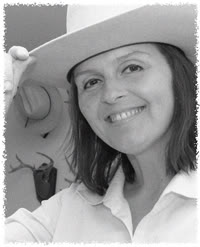
    Gina Foringer

    Those suits in the corner office–what do they do anyway?  Well, they manage employees, set budgets and goals and plan for growth.  Oh, and some math.

    Gina Foringer is an executive vice president for Versar, a publicly held, departement of defense contracting company in environmental, construction management, engineering and emergency response.  She heads up the Professional Services Group (PSG), a division that provides professional services for government, private and non-profit entities throughout the world.

    I also feel obligated to tell you that Gina doesn’t have a corner office.  

    Can you explain what you do for a living? My division is responsible for marketing our environmental contracting expertise, which means I spend a lot of time estimating the costs of projects.  Then I help my team manage the projects we already have.

    When do you use basic math in your job?  Always!  Part of my work involves writing proposals for work that is estimated in hours.  I use estimation, then drill down to the details by adding varying fees to an hourly rate.  At the end, I have to “reality check” the bottom line.

    Do you use any technology (like calculators or computers) to help with this math?   While on the phone with customers, I use mental math to approximate percents for labor.  That gives me a ballpark figure.  When I do the estimate, I use Microsoft Excel with linked tabs rolling into a master spreadsheet.  It’s fun!

    How do you think math helps you do your job better?  If I didn’t know the basics of percentages and applying them, I’d be lost.  I’ve done it so much, I do it in my off-time, too.  If someone tells me an annual number (salary, car insurance premium or groceries), I have to stop myself from generating an hourly rate in my mind that has nothing to do with the conversation.  Crazy, I know.

    How comfortable with math do you feel? I feel comfortable with it now.  I still have to check myself because the rates we use change.  Basically, I calibrate my math skills every fiscal year.

    What kind of math did you take in high school?   I didn’t take much in high school, maybe basic trigonometry.  I had low self esteem in high school.  I think math actually made me feel better.  It’s how I think, and was probably the beginning of discovering my self.  I ended up getting a degree in math, and when I got my MBA, I was surprised by how much calculus I got to use.

    Did you have to learn new skills in order to do this math?  I developed the process.  The hardest part for me is guiding others between estimating, calculating, then coming back to estimating for cost quotes.  Oftentimes, the calculation comes in too high or low, and we have to change things that don’t make sense.  The numbers are not right or wrong, but have to come to an intuitive place where we know it’s just right for that particular situation.

    Do you have a question for Gina? Ask it in the comments section. (I can tell you that she has some really interesting ways to figure out percents!)  

  • Math Secret #2: You Were Born This Way (take 2)

    Photo courtesy of woodleywonderworks.

    All summer long, we’ve seen some pretty amazing research on math ability and education.  We’ve been told that understanding geometric concepts may be innate and that elementary-aged students with a good sense of numeracy do better in math by the 5th grade.  And yesterday news of another study hit the internet.

    According to the headlines, we were born either good or bad at math.  At least that’s how this study is being interpreted by bloggers and news outlets.  Except that’s not necessarily what the study concludes.

    This makes me mad.  Really mad.  I have not read the full study, but nothing in the abstract–or even the stories and blog posts about this study–suggests that people are born with or without math ability.  Instead, it seems that the cheeky headlines were just too good to pass up.

    Here’s what the study author, post-doctoral student Melissa Libertus, does say:

    The relationship between ‘number sense’ and math ability is important and intriguing because we believe that ‘number sense’ is universal, whereas math ability has been thought to be highly dependent on culture and language and takes many years to learn… Many questions remain and there is much we still have to learn about this.

    And here’s the nitty gritty on the study itself.  A group of 200 children, with an average age of 4 years old, was given a number sense test. (You can take the exact same test here).  These children were then asked to perform a variety of age-appropriate math tasks, including counting, reading numbers and computations.  The results make a lot of sense: children who performed well on the number sense test did better on the math tests.[pullquote]No one says that we’re born good or bad at reading.  We’re all expected to learn to read–and read well. So why do we say that about math?[/pullquote]

    But the results seem to be misrepresented by media and others.  These kids were selected precisely because they haven’t had any formal math education.  They’re preschoolers.  So, according to many news reports, kids are either born with number sense or get it from formal education.

    Rubbish.

    If you had a child in the last 10 or 15 years–or know someone who has–you are probably familiar with the big, big push for early literacy. Parents are encouraged to read to their kids, even when they’re babies, which research has shown helps the children develop age-appropriate literacy skills. In fact, kids who have had access to pre-reading experiences as infants, toddlers and preschoolers do much better with reading in elementary school.  (This is one of the tenets of Head Start programs around the country.)

    No one says that we’re born good or bad at reading.  We’re all expected to learn to read–and read well. So why do we say that about math?

    Just like the researcher, I think this study raises more questions.  And here’s the really big one: What can parents do to boost their kids’ numeracy before formal education begins? (I actually wrote about this earlier this week.)

    I still maintain that we are born with an innate understanding of math–just like we’re born knowing something about language.  But without stimulating this understanding, kids can fall behind their peers or at least not reach their full potential.  We read to little children so that they can learn to read on their own.  And we should be doing something similar with kids so that they can do math.

    A friend and fellow math blogger, Bon Crowder has launched an amazing program she’s calling Count 10, Read 10. It’s a simple idea: Parents should spend 10 minutes each day reading to their young kids and 10 minutes doing some sort of math with them.  But nobody is saying flash cards, worksheets or chalkboards are necessary.  The trick is to sneak the math into everyday activities, which can be as simple as counting the steps your new walker takes.

    So here’s what I think happened with the news reports of this study: reporters, editors and bloggers simply tapped into their own misconceptions about math–and even their own math anxiety–and distorted the message.  For many people, it’s a “fact” that some people are just naturally bad at math.  I hope you’ll help me challenge that notion.

    Meanwhile, be careful what you read.

    P.S. A great math educator, David Wees has also chimed in on this topic, and shares–more eloquently–some of the same concerns I have.  Read it!

    So what do you think? Are people born good or bad at math? Can parents help develop numeracy in their children?  How?  Share your ideas in the comments section.

  • Food for Thought: 5 Ways Hurried Moms Can Make Math Easy

    Photo courtesy of sabianmaggie

    Boy, do I remember those early days of parenting my daughter. I was working full time, coddling a strong-willed toddler, trying to serve balanced meals, selecting great books to read to her and trying to keep my house and yard clean enough that my neighbors wouldn’t call Child Protective Services on me.

    Adding one more thing to the list would have made my head blow off of my shoulders.

    And yet, today, we are being asked to do that one more thing: introduce numeracy to our little Janes and Johns. In other words, math.

    Want some tips on how parents can develop numeracy in their little kids–and keep their own heads on their shoulders, right where they belong? Read the rest of this post at Words To Eat By, where I guest posted today.

    By the way, would you like me to guest post at your blog?  Or do you know of a blog that I would fit right in with? I’ve got lots of ideas to share with anyone who will listen! And I promise I’m a good guest.  I wipe out the sink after I brush my teeth and don’t mind if the cat sleeps on my pillow.  Get the details here.

  • Math at Work Monday: Marie Grace the children’s knitwear designer

    Math at Work Monday: Marie Grace the children’s knitwear designer

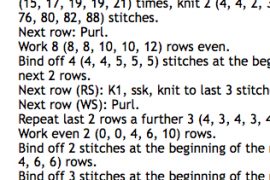
    A pattern snippet from one of Marie Grace’s original designs.

    If you don’t knit, a knitwear pattern probably looks like a random selection of letters and numbers.  But that special code actually reveals beautiful creations–sweaters, hats, booties and blankets.  Marie Grace Smith is the founder ofMarie Grace Designs, and she lives these patterns.  You might be surprised to learn how much math is involved in developing these patterns.  Marie Grace was!

    “If I had known how much math I would need to do to make a living playing with yarn I would have become a painter or something. Just kidding. Sort of.”

    What does a children’s knitwear designer do? I design and write patterns for hand-knitting. I have my own pattern line and have had patterns published in various knitting magazines.

    When do you use basic math in your job?  I use math for almost every aspect of what I do. It takes a lot of math to get from an idea and a ball of yarn to a written pattern somebody else can follow to make a finished sweater (or hat, or blanket, etc…)

    The first thing I have to do to work up a new design is figure out the stitch and row gauges–or the number of stitches and rows in an inch of knitting with the yarn I’ve chosen for the design. To do this, I knit a square and then measure it, dividing the width measurement by the number of stitches across and the length by the number of knit rows. This gives me the number of stitches per inch (stitch gauge) and the number of rows per inch (row gauge). Every measurement after this–chest width, sweater length, sleeve circumference–all must be converted from standard inch measurements to stitch and row gauge. That means lots of math. Additional things like fancy stitch patterns, button and buttonhole placement, and shaping for armholes and necklines mean even more math.

    Maggie Knit Blouse, one of Marie Grace’s designs

    Once I’ve worked out all the counts and directions for my sample sweater I also need to figure all those same counts and measurements for various other sizes of the same design… sometimes as many as 8 sizes total. That way when you buy one of my knitting patterns you can knit sizes 2, 6 or 10 and have all the accurate directions and counts needed for the final product to turn out just like my original design sample. I also include how much yarn you’ll need for any given size which means–you guessed it–even more math.

    Along with all the design stuff, I also have all the same responsibilities as any other business owner as far as figuring my incoming and outgoing funds, expenses, and taxes. More math!

    Do you use any technology to help with this math?  Spreadsheets! Lots and lots of spreadsheets. I’m sort of a spreadsheet junkie. Most of the math I use is basic math, but its very repetitive so spreadsheets save lots of time and cut down on mistakes. It would take a ridiculous amount of time and effort to work up a new design from beginning to end if I didn’t have tools like spreadsheets.

    How do you think math helps you do your job better? I couldn’t do my job with any sort of accuracy without math.

    How comfortable with math do you feel?  I’m relatively comfortable with day-to-day math but I wouldn’t say I’m good at it. I have to stop and think things through one step at a time and I often scribble things down on paper even for simple calculations, just to be sure I’m on the right track. I’m much more comfortable with the math I do for work, simply because its so repetitive. Its sort of like doing multiplication drills on a regular basis.

    Marie Grace Smith

    What kind of math did you take in high school?  I went through Algebra, Geometry, Trigonometry, and Calculus by the time I was out of high school. I didn’t like math, and I don’t think I was naturally good at it. But I can figure things out given time and scrap paper. I think that’s how I managed through all the math in school.

    Did you have to learn new skills in order to do this math?  The math I do for designing is all pretty much basic math (addition, subtraction, multiplication, and division), along with some algebra and percentages. It’s all stuff we all learn in school.

    Do you have questions for Marie Grace?  Ask them in the comments section, and I’ll be sure that she sees them.

    I’m still on my virtual book tour, visiting a variety of interesting spots all over the blogosphere!  Due to a technical glitch, my scheduled podcast at Out of the Storm News is postponed to next week, but you can catch up on last week’s travels at these links:

    CollegeSurfing Insider: Why Math is a Must for Any Career

    Frisco Kids: Q&A: Math for Grownups by Laura Laing

    Flynn Media: When It Comes to Math, Parents Should Chill

    Credit.com: A Simple Approach to Your Debt and Finances

  • Math at Work Monday: Nikki the hair stylist

    If you’re even the least bit vain, like I am, you know that finding a talented hair stylist is worth its weight in gold.  Like many other careers, that talent is part science and part art, as Nikki Verdecchia of NV Salon Collective in Baltimore can attest.  Nikki is an award-winning stylist who opened her own salon a few years ago.  Now, along with figuring the ratios for a custom color, she also does a lot of business math.  

    Meet Nikki!

    For Honfest, Nikki gives a young girl a traditional Baltimore beehive.

    What kinds of things do you do each day at work?  I am a hair stylist and salon owner.  My job as a hair stylist on a daily basis is to make people look and feel their best.  As a salon owner I have to make sure that the business is running smoothly and that there is more money coming into the bank than there is going out.

    When do you use basic math in your job?  As a salon owner I use simple addition and subtraction to make sure the salon’s income supports the checks I write each month.  I also need math for payroll.  For this I use percentages since our stylists are paid a commission, or a percentage of the money they bring into the salon.

    As a hair stylist, I use fractions to mix custom color formulas for our clients.  In order to make each formula special, we mix color tones together in 2 ounce formulations to create unique looks.  For instance, I may use 1 oz of dark golden blonde, 1/2 oz of dark neutral blonde, and 1/2 oz of light golden blonde to create a warm, buttery blonde for a client.

    Nikki is also a makeup artist and works closely with Baltimore’s most notable burlesque duo, Trixie Little and the Evil Hate Monkey

    Do you use any technology to help with this math?  As a business owner, all of those tasks are done using computers and calculators so that I have records of everything I do.  Since I am often dealing with large numbers, it makes my job easier to use technology.  As a stylist I am a creative person first and foremost, and the computations I do to mix color are done with mental math.

    How do you think math helps you do your job better?  I would never get the paychecks right or be able to create beautiful color without math!  It keeps me consistent.

    How comfortable with math do you feel?  I have always been comfortable using math to create hair color.  When I opened my business and had to start using math more often I was very uncomfortable and sure that I wouldn’t be able to do it well.  I have surprised myself that I am much better at it than I ever thought I was.  Technology definitely makes it so much easier!

    What kind of math did you take in high school?  I took algebra, geometry and calculus in high school.  My grades in those classes were dramatically lower than language-based classes that I took.   I never liked math before, but every time I balance my check book to the penny at the end of the month I get this secret thrill that I have managed to overcome a fear I had and learn how to perform a new task that I never thought I could do well.

    Did you have to learn new skills in order to do this math? Most of the math I do every day is so simple that I’m sure I learned it in grade school.

    Questions for Nikki?  Please post them below, and I’ll make sure she sees them.

  • Special Sunday Edition: Debt, deficit and debt ceiling

    Photo courtesy of iDanSimpson

    I don’t usually post on Sundays, but with Geithner’s debt-ceiling deadline looming on Tuesday, I wanted to share this really great video.  Using some math and graphs, the narrator explains the debt, deficit and debt ceiling in ways that even your 4th grader can understand.

    It’s a little long — almost 10 minutes — but trust me, it’s not full of the gobbledy-gook that economists are sometimes famous for.  You will be smarter after you watch it.  Promise.

    Questions?  Ask them in the comment section.  (But please skip the political comments. Math is neither Democrat nor Republican.)

    Also, be sure to come back tomorrow for an exciting August announcement!

  • Guest Post: Grownups can learn new tricks!

    Bon Crowder, another math evangelist

    Bon Crowder, another math evangelist

     couple of weeks ago, a fellow freelance writer wrote me about her foray into graduate school.  She needed to brush up on some math skills, and she wasn’t sure how.  I have a feeling that her questions weren’t unique.  Whether you need to learn a little extra to help your kid with his homework or you need to take a math class to further your education, learning math again (or for the first time) can be daunting.  

    Luckily, my friend and fellow math blogger, Bon Crowder offered to write a guest post on this very topic.  I swear, Bon and I were separated at graduation or something, because we approach math education in very similar ways.  Plus she’s fun.  (See? Math folks aren’t always boring and difficult to understand!)

    I wanted to title this “Being a Great Adult Learner.”

    But that’s dumb. All adults are great learners. If we weren’t, we’d be stumbling around, bumping into doors, starving and naked. We know how to learn, and the proof is that we’re still alive.

    And dressed.

    The question is “What makes you learn?”

    1) You need confidence.

    Confidence involves two things: feeling worthy and knowing you have the ability.

    When people feel they’re entitled to something, they’re more likely to feel confident in getting it. Hang around any Best Buy service desk and you’ll see this in action. People say all kinds of strange things when trying to return a broken product, and these things are said with a sense of entitlement. BY GOLLY they’re going to get their way!

    So how do you gain worthiness and ability? You’re worthy of it because you already have it. And you’re able to do it because you already do.

    You have it all. It’s just hidden behind a wall of words you or someone else (or both) has told you for years. Now’s the time to ignore everybody, even yourself.

    Because here’s the gosh-honest truth: There is not a single thing within a mathematician that is not within you.

    You’ve done math since you were a kid. Even before you were in school. You knew at a deep level that if there was one toy and there was another kid around, you’d better run like the dickens to get it. There’s no dividing that toy evenly between kids.

    You balance your checkbook (or you would be in jail right now), you probably have some rough idea of your gas mileage, and you know that if you have 12 people coming over, you’re going to have to double or triple that recipe for shepherds pie. You know math. Now’s the time to admit it.

    So say this every night before your prayers. If you don’t pray at night, say it twice:

    I do math. Today I woke up on time because I calculated how long it would take to get dressed. I knew how much money to spend because balanced my checkbook. I figured out how much weight I needed to lose – and I used math to do it.

    Modify this statement to fit your lifestyle and run with it. Every night.

    2) You need the right environment.

    Once you’ve tapped in to the realization that you’re inherently good at math, you need the right learning environment.

    This includes location, timing and the other people involved. If you have to drive too far away after working all day and all you get is a lousy quarter-pounder-with-cheese, you’re going to be tired, grumpy and irritable. If your class is full of teenagers fresh out of high school and the professor is 400 years old and believes in death by PowerPoint, things are not going to go well.

    How do you know the right environment?

    Look at all the learning experiences you’ve had through the years. List out the good ones and the bad ones. And then dig deep – what made the good ones good? Why were the bad ones so detrimental?

    Include timing, location, student body, temperature in the room and details of the instructor. List out the attitude of the instructor, his/her teaching style, voice intonations – even how he wrote on the board.

    Pick out the deal-breakers and the nice-to-haves and write them on a special piece of paper. This is your official “Environment Requirement” page. Laminate it, put it in Evernote, tatoo it to your bottom – whatever you do to keep it close so you can refer to it often.

    How do you make sure your Environment Requirements are honored?

    Here’s where that sense of entitlement comes back into play. If your class has a deal-breaker environment element, do something about it. Think, “If this were a faulty remote control that I bought at Best Buy, how would I handle it?”

    Ask the instructor to manage the loud students better. Ask building maintenance to change the temp of the room (or bring a sweater). Don’t sign up for a class during a time when you’ll be tired, hungry and irritable.

    And if you can’t change the environment – leave. Drop the class. Get your money back.

    If it were a crappy remote control, that’s what you’d do, right?

    You’re dressed…

    And fed. You learn all the time. And you do math.

    Now go find a class that fits and have fun!

    Bon Crowder publishes www.MathFour.com, a math education site for parents. But that’s not all!  Bon has launched a really, really, really cool initiative called Count 10, Read 10.  While parents are encouraged to read to their infants, toddlers and preschoolers, we’re rarely encouraged to inject a little bit of math into the day.  Bon will show you how.  Take a look at her blog for more information on developing math literacy (or numeracy).  I’ll be writing about this more in the coming months.

  • Nothing But Net

    Nothing But Net

    A few years ago, I got this idea that I wanted to learn how to sew.  My mother in law bought me a lightweight machine at a yard sale for $10. So I decided it was time to teach myself how to sew.  How hard could it be?

    Turns it, not so much, when you have the internet at your fingertips.  With a few searches, I unearthed great Flickr tutorials for zipper pouches, blog posts with step-by-step instructions on how to make box bags and a really, really amazing month-long series of fat-quarter projects on a blog called Sew, Mama, Sew!

    One of my zipper pouches made from ModGirls Sis Boom by Jennifer Paganelli

    A fat quarter is a piece of 18″ x 22″ fabric.  In most cases, it’s a quarter of a yard, but not cut from one side of the width to the other.  And it’s a cheap and easy way to buy those gorgeous designer fabrics, like Amy ButlerModa and Alexander Henry.  This is a big deal, because I was quickly realizing that I’m a fabric addict.  The editors and contributors at Sew, Mama, Sew had great projects for fat quarters: purses, journal covers, pin cushions, crochet hook rolls and even fabric boxes.  I was in heaven!

    When I published Math for Grownups and learned that a virtual tour would be a great way to promote the book, my first thought was that maybe — just maybe! — I could guest post on Sew, Mama, Sew.  Imagine my surprise when the editors there jumped at the chance.  I felt like I was one of the cool kids.

    And today is the big day. You can read my guest post, “Nothing but Net,” which talks about how we can mentally (and physically) translate 2-dimensional figures into the 3rd dimension.  That’s what patterns are, after all.  Even if you don’t sew, this skill is a great one to have!

  • Math at Work Monday: Martha the cafe owner

    Boheme Cafe in downtown Baltimore

    My friend Martha Lucius owns and manages Boheme Cafe in downtown Baltimore.  She has also catered my book launch before, and so I thought it would be great to introduce you to her — and to the math that she does.  

    What is involved in owning and running a cafe?  My job is diverse; I wear many hats.  I make sure that customers can be served the food on the menu (a matrix of salads and items for the pastry case), which also means ensuring that staff follows the recipes (read: math) every time. I also make sure our catering clients get trays of food and that they receive their bill.  And my job includes marketing, artwork, and simple mechanics!

    When do you use basic math in your job?  I make conversions every day: pounds to ounces or vice versa.  My entire business profile is on QuickBooks, so often I can ask the program to do the math for me, but simple percentages, and regularly noting where daily numbers are, helps me know how healthy the business is. (Healthy and profitable are actually related subjects.)

    Do you use any technology to help with this math?  We do use calculators and computers; they confirm the math that we do in our heads.  Sometimes we talk about food costs, which refers to how much we are paying for any one product.

    How do you think math helps you do your job better?  I must do the math on my job or I would be out of business.  Without math, I would not necessarily know if there is money in the bank to do anything.

    How comfortable with math do you feel?   I am comfortable with the math I use at work, and at home.  My daughter takes algebra, which I like, but I wish she wouldn’t rush me… it takes me a while to understand the topic they are discussing.

    What kind of math did you take in high school?  I took high school algebra, geometry, and trigonometry, and I was comfortable with it.  As time has passed, I have come to love getting the correct answers!

    Did you have to learn new skills in order to do this math? No, most of the math I do is just a reintroduction to math I already knew. I just have to reach back there and see what I did know–get back to the page in the proverbial textbook.

  • Film Friday: Meathead Does Math

    The mental math is flying in this hilarious clip from the classic, groundbreaking sit com, All in the Family.  (And it’s even better because, guess who’s there?  The Jeffersons!)

  • Math Secrets: A round up

    Photo courtesy of jez.atkinson

    I’m on vacation this week, so I thought I’d do a quick round up of Math Secrets to date:

    Math Secret #1: There’s More than One Way to Skin a Math Problem:

    Most math teachers teach that that there’s one process for solving math problems, but this approach just isn’t very practical.  Now that you’re a grownup, you can find your own way to the answer.  I promise.

    Math Secret #2: You Were Born This Way:

    Think you don’t have any math sense?  Think again.

    Math Secret #3: You Can Skip the Love:

    Knowing how to do math ≠ loving math.  You really only need two things: acceptance and tolerance.

    What to share your own secrets?  Post a comment.

  • Math at Work Monday: Ron the web designer

    Math at Work Monday: Ron the web designer

    Ron Doyle

    Ron S. Doyle is both a web designer and a freelance writer.  In fact, he’s found a particular niche in developing web sites for other freelance writers.  He’s also got a wicked sense of humor and uses math in his work.

    Can you explain what you do for a living?

    The highfaluting answer: I help clients build or restructure their online presence through web development and design, business analysis, project management, strategic brand management, consultation and training.

    The mundane answer: I make websites!

    When do you use basic math in your job?

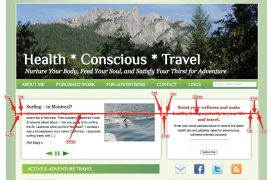
    I use proportions, algebra and basic geometric concepts at work every day. Most of what I’m doing involves simple addition, counting pixels. For example, if a website’s main container is 960 pixels wide, I have to make sure that all the margins, padding, borders and boxes inside add up.

    The Health*Conscious*Travel homepage above  is 960 pixels wide, but here’s what I see:

    2px border + 21px padding + 1px border + 555px feature box + 1px border + 21px padding + 1px border +

    334px subscribe box +1px border + 21px padding + 2px border = 960 pixels wide!

    This basic addition turns into algebra when a client comes to me and says “I have this 300 pixel wide advertisement that must go here” or
    “I want to embed this YouTube video there.” Then all the other elements become variables—and I change them to make everything balance with the ad or video.

    It gets even more complicated when I start adding things like drop shadows or glowing edges to an object, which have a specific radius from the edge. A 3px drop shadow spreads 1.5 px past the edge of the object, etc.

    Certain objects, like videos, also must appear in specific proportions, e.g., 16:9. For example, if I know I must fit a high-definition video into a space that’s 500 pixels wide, I know that the video will be a little more than 281 pixels tall.

    16/9  =  500/x

    16x  =  4,500

    x  =  281.25

    I also use proportions for my favorite design element: The Golden Ratio, 1: 1.618. It’s a proportion that naturally occurs in nature and is used widely in design and architecture. I agree with the ancient Greeks that it’s a beautiful shape and I try, whenever possible, to use it in my designs. Sometimes, it’s a fun little secret for me. For example, Ann Logue’s website doesn’t seem to have many boxes or rectangles at all:

    But there are actually seven golden rectangles coded into the layout:

    Do you use any technology (like calculators or computers) to help with this math? Why or why not?

    I use paper to draw initial designs, a calculator to figure out proportions and design software like Adobe Creative Suite to help with measurements and placement of objects before I write any code. I suppose I could do it all while I’m writing the code, but I like to keep costs low for my clients—and I like going outside from time to time.

    How do you think math helps you do your job better?

    Math doesn’t just help me do my job better, it makes it possible.

    How comfortable with math do you feel? 

    None of this math feels uncomfortable to me. All web designers use math, whether they realize it or not, but some have a natural ability to see things like the golden proportion without picking up a calculator. I don’t know if I have that innate aesthetic skill—so the numbers make me feel more confident in my design decisions.

    What kind of math did you take in high school? Did you like it/feel like you were good at it?

    I didn’t develop a relationship with math until the seventh grade. That year, I had a great algebra teacher; things just clicked and I’ve loved mathematics ever since. I took Geometry, Algebra II, Trigonometry, PreCalculus and AP Calculus in high school. I always felt confident in math class, except Calculus; my teacher struggled teaching the subject and I had a bad case of graduation fever.

    As a psychology major in college, I didn’t love research but I enjoyed the statistical part of the work (and I took Calculus for Engineers even though it wasn’t required). Before I started my current business, I was a high school teacher. Trigonometry was one of my favorite subjects to teach.

    Did you have to learn new skills in order to do this math? Or was it something that you could pick up using the skills you learned in school?

    School definitely helped me feel confident with math, but I learned the skills I use today from building things with my father when I was younger. I spent a lot of my childhood with a tape measure with my father rattling off fractions at me—I understood 5/8 and 3/4 and 9/16 on a visual level long before I learned them in school.

    Everything else I learned from Donald Duck in Mathemagic Land:

    Do you have questions for Ron?  If so, ask them in the comments section below.