Category: Math for Grownups

  • Math Secret #2: You Were Born This Way

    Math Secret #2: You Were Born This Way

    I’m on the right track, baby

    I was born this way

    –Lady Gaga

    It was day two of my second year of teaching high school geometry, and already I had been called for a parent meeting in the principal’s office. I was a bit worried.  What on earth could a parent have issues with already?

    Mrs. X sat with her 14-year-old son across the desk from the principal.  I shook her hand and took the chair next to her.  The principal handed me a copy of my geometry class syllabus that I’d sent home with all of my students during the first day of class.  Like every other class syllabus at this particular school, mine included class rules, the grading system, a list of general objectives and the obligatory notice that I’d be following all other relevant objectives outlined by the Commonwealth of Virginia.

    “Mrs. X has some questions about your syllabus,” he said, turning the meeting over to her.

    “I don’t understand what this objective is,” Ms. X said, pointing to her copy of the syllabus and then reading aloud: “‘Students will use their intuitive understanding of geometry to understand new concepts.’  What does ‘intuitive’ mean?  Are you going to hypnotize my son?”

    I instantly relaxed.  Clearly, I was dealing with an over-zealous, perhaps under-educated parent, who had been listening to too much right-wing radio (which in the early 1990s was railing against witchcraft in the classrooms).  I might think she was crazy, but I could handle this.

    I calmly explained that all students come into my class with a basic understanding of shapes and the laws of geometry.  I needed my students to tap into this intuitive understanding so that we could build on skills they already had.

    In short: These kids already knew something about geometry, and as a professional educator, I was going to take advantage of that.

    What I didn’t realize was that my heartfelt theory was not proven fact.  But in April of this year, the Proceedings of the National Academy of Sciences published a study that does just that.  Here’s the gist:

    Member of the Mundurucu tribe of Brazil (photo courtesy of P. Pica)

    French researcher, Pierre Pica discovered that members of the Amazon Mundurucu tribe have a basic understanding of geometric principles–even though they aren’t schooled in the subject and their language contains very few geometric terms. In other words, geometry is innate.

    In fact, Pica found that French and U.S. students and adults did not perform as well on the tests as their Mundurucu brethren.  Turns out formal education may get in the way of our natural abilities.

    “Euclidean geometry, inasmuch as it concerns basic objects such as points and lines on a plane, is a cross-cultural universal that results from the inherent properties of the human mind as it develops in its natural environment,” the researchers wrote.

    Bla, bla, bla, and something about points and lines.

    Not to toot my own horn or anything, but what this means is I was right all those years ago.  We may not have been born with Euclid’s brain, but we do, at the very least, pick up his discoveries just by interacting with our world, rather than sitting in a high school classroom.

    Actually, the philosopher Immanuel Kant said as much when he was doing his thing in the 18th century, so this isn’t a new idea at all.  But many students (and parents) didn’t get that memo.

    The bottom line: aside from uncommon processing and learning differences, there’s no reason that you can’t do ordinary geometry.  More than likely, any obstacles you face are rooted in fear or stubbornness.

    And I, for one, won’t let you get away with that.
  • Math at Work Monday: Shana the jewelry designer

    Math at Work Monday: Shana the jewelry designer

    Art and math are diametrically opposite, right?  Wrong.

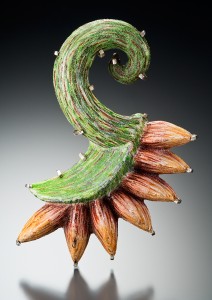
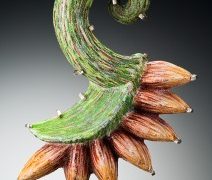
    Blossom, layering of enamel over silver. Photo credit: Hap Sakwa.

    Shana Kroiz is a Baltimore-based, acclaimed jewelry designer and artist, whose work has been shown in the some of the country’s most esteemed galleries and museums, including The Smithsonian and the Museum of Arts and Design in New York City.  She’s kind of a big deal–and she does math!

    When do you use basic math in your job?

    Most days I contend with a variety of math problems, whether I’m measuring a piece or resizing a ring. I use wax to cast my designs, and so I have to convert the weight of wax into the the specific weight of the metal I am using. I also construct three-dimensional forms out of sheet metal, which requires some geometry. I have to know the sizes and weights of my pieces, so that they are not too heavy to be worn. When scoring and bending metal, I have to figure out the angle of my score lines in order to get the correct angle out of the sheet I am bending. Then there’s the business side of things: calculating the time it takes to make a piece with the cost of materials and the addition of any profit I need to make. Prices also have to be converted into a retail and wholesale values.

    Do you use any tools to help with this math?

    Yes, I use calculators, calipersdividers, scales and, of course, computers. They all help with precision and time management.

    How do you think math helps you do your job better?

    Without math, it is almost impossible to do precision work. I work with a lot of potentially dangerous chemicals, and the math involved keeps me safe.  Plus, if I mix the chemicals incorrectly, the result won’t be what I need.  Being precise with my math means that I can avoid having to do things over again.

    How comfortable with math do you feel?

    I do most of the same sorts of problems over and over, so I feel comfortable in the studio, and can teach to my students. But there are times when I wish I had a deeper or broader understanding of how to use math. Sometimes I think I take too long to find the answers to calculations.  If I understood how to use a different formula I might get to the answer faster.

    Did you have to learn new skills in order to do this math?

    Yes, but I had to work it out on my own. When I had a tangible need, I figure things out.

    What kind of math did you take in high school?

    I went through algebra and some geometry. And I didn’t feel like I was good at it at all! I could follow a problem if I had a model, but I did not have a good enough conceptual understanding of math to work out the formulas on my own. So I would say I was average at best, but I think if it had been taught in a way that I could understand I would have been much better.  I do think if math was taught with more useful applications, students would have an easier time learning, understanding and being engaged in math as a useful tool for life.

    Each Monday, I feature someone who uses everyday math in their jobs.  If you would like to be featured (or if you know someone who you think should be featured), let me know at llaing-at-comcast-dot-net.  You can also catch up on previous Math at Work Mondays.

  • Open Thread Friday: Math-in-the-garden questions

    Open Thread Friday: Math-in-the-garden questions

    In honor of a gorgeous weekend that is just around the corner (at least here in Charm City), I thought I’d see if anyone has any backyard math questions.  Are you wondering how to figure out how many cubic yards of mulch you  need?  What about setting the darned sprinkler system so that your posies get exactly the right amount of the wet stuff?  Or perhaps you’re planning a new garden and need some advice on buying materials.

    Dig deep, and post your questions below.  I’ll come up with some answers–before the weekend is over!

    The last Open Thread Friday prompted a salary question that I thought deserved its own post.  Check it out here: Is Your Boss Ripping You Off?

  • Math at Work Memorial Day: Wendy the television line producer

    Math at Work Memorial Day: Wendy the television line producer

    What is a television line producer, and how long have you been doing this job?

    Production companies hire me after they’ve received the “green light” to develop and produce a new television series. The first thing I do is read something called the bible, a document that explains the concept, visual look and tone of the show. My job is to create a production budget based on the amount of money the executive producer has for the entire project. For example, if he or she gives me $6 million to produce 26 episodes, I need to allocate every cent within several dozen categories over the length of the production. I also create the pre-production, shooting and post-production schedules, assist with casting, hire the technical crews and then oversee the whole project from beginning to end.  I’ve been doing this work for 23 years.

    When do you use basic math in your job?

    I have to break everything down in the budget and make sure we only spend what we have! So for example, I have to figure out how many days we need a wardrobe assistant, how much it will cost, and make sure we have some wiggle room for overtime, extra prep days, etc. Sometimes, if I’m working on a smaller budget show, I’m the one who calculates the actors’ and technicians’ time sheets, so lots of adding, multiplication, etc.

    Every week or so, I have to do cash flow reports; how much I estimated to spend, the actual costs, and estimated future costs. It all has to balance out, so if we do lots of overtime one week, I need to figure out what needs to be cut over the coming weeks to make up for that shortfall.

    Do you use any technology (like calculators or computers) to help with this math?  Why or why not?

    Oh yes!! Time sheets are now calculated on the computer, but I still check everything with a calculator, as I’ve fallen victim to incorrect formats. Nothing worse than a camera operator coming up to you saying his paycheck is wrong!! Cash flows and budgets are either done on Excel or through special software, often MovieMagic, which has programs for film and television scheduling and budgeting.

    🙂

    I have to admit I also still count on my fingers sometimes

    How do you think math helps you do your job better?

    It forces me to focus on what is perhaps the most important part of any creative project: the bottom line. Television is lots of fun, but it’s a business, and the executives and broadcasters expect me to deliver a project on budget. Time is money when you’re on-set, so even 15 minutes of overtime can sink you, if you have dozens of cast and crew to pay. Math makes me more organized!

    How comfortable with math do you feel?

    Today, I’m very comfortable with math, but since I have a tendency to do everything quickly, my challenge is always to slow down and get it right.*

    What kind of math did you take in high school?

    I hated math all through school, and always excelled at writing, and other creative subjects. I had one fabulous math teacher in tenth grade who finally made math fun. Good thing I was in his class, because I’d always figured I’d never need math to pursue my career goals, but was amazed years later to discover how much math I needed when I started working in television production. I was a script supervisor whose duties included timing segments with a stop-watch, adding things up and making sure we wouldn’t go into editing with too many long scenes. I was terrified of making math errors, and realized quickly to slow down, relax and always double-check my work.

    Wendy Helfenbaum is a writer and television producer in Montreal, Canada. Visit her at http://www.taketwoproductions.ca.

    *This is perhaps the best advice I can offer anyone who is struggling with math.  Only your fifth-grade teacher and the Mathletes coach care how quickly you can do calculations.

    Last week’s Math at Work feature was with my sister, Melissa, who is a speech therapist.

  • Oprah by the Numbers

    Oprah by the Numbers

    Wondering how you (or someone you love) is going to survive without the Daytime Diva?  Here’s a selection of stats about her show, from SheKnows:

    1. About 1.3 million people came to see her show over the last 25 seasons.
    2. Most frequent female guest?  Celine Dion with 27 appearances.
    3. Most frequent male guest?  Chris Rock with 25 appearances.  (That’s not counting Dr. Phil, who came on the show a whopping 118 times!)
    4. Total number of cars given away: 570

    Read the rest at SheKnows!

  • Math at Work Monday: Melissa the Speech Therapist

    Math at Work Monday: Melissa the Speech Therapist

    When you were in middle and high school, did you think you’d never need to use the math you were learning?  Like most grownups, you probably found out that, yes, you did need some of it — and some of it you’ll never do again.

    Each Monday, I’ll introduce you to someone who uses math on the job.  We’re going to skip over the engineers, physicists and statisticians and stick to folks who use regular, everyday math.  First up, my sister, Melissa, a speech therapist.

    So, what kind of speech therapist are you, and how long have you been doing this job?

    Lots of people think of speech therapists in the school setting, working with kids.  But I work with adults, who are critically ill or recovering from an injury or illness in rehab.  I’ve been doing this for 19 years. Basically, I provide care in these areas:

    • Speech and communication: patients who have declined neurologically or physically and cannot talk, have slurred speech, or any difficulty communicating.
    • Swallowing: patients who have swallowing impairments, usually from neurological deficits, or physical decline in some way.
    • Cognitive: patients whose thinking skills have declined, including memory, problem solving, attention, reasoning.
    • Other specialty areas: patients with tracheotomies, laryngectomies, concussions.

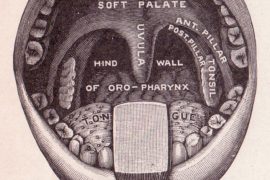
    All of my patients are adults, and most of them have had some sort of illness or injury.

    When do you use math in your job?

    Rehab is very goal oriented.  I meet with patients on a regular basis and keep data on those goals — how many questions the patient answered correctly or the number of times a he performed a certain task properly. At the end of the day, I tabulate that data. And then at the end of the week, I average the data for the week.

    I also use math in some of my tasks with the patients.
    Functional math is a form of reasoning, and so I will provide a patient
    with math tasks to “rehab” his or her reasoning skills.

    These calculations help me determine if the patient has met that goal, and if so, I create a new goal.

    I also use math in some of my tasks with the patients. Functional math is a form of reasoning, and so I will provide a patient with math tasks to “rehab” his or her reasoning skills.

    What kind of math is important for your job?

    Percents!  If the patient got 8 out of 10 correct on a certain task, I put in the note that she was 80% successful. (But sometimes the numbers aren’t great for mental math: 29 out of 44 correct, for example.)

    Most rehab and acute care settings use a very specific form of measuring assistance, called Functional Independent Measures, or FIMS.

    • Independent: 100%
    • Modified Indpendent: 100% with extra time
    • Supervision: 90% or above
    • Minimum Assist: 75-90%
    • Moderate Assist: 50-75%
    • Maximum Assist: 25-50%
    • Dependent: less than 25%

    So, since I measure FIMS weekly, I am always creating percentages in my head (and on paper) of how a patient is performing on that certain task.

    How does math help you do your job?

    It allows me to be very accurate in data collection. Of course, many patients’ lengths of stay is dependent on whether or not there is proven progress, and the best way to prove it is to show it in black-and-white. Patients and their families would rather see “80% accuracy” as opposed to “required min assist.” Percents are more accurate and detailed.

    I also firmly believe that having patients do math themselves helps them building their reasoning skills.  I think I am doing my job better by making them do math! I will even have my patients average their data for the week.  This helps them use reasoning skills as well as understand their goals and how they are progressing.

    How comfortable with math do you feel?

    I feel comfortable with simple math, especially if I can write it out, use pen and paper, etc. I get bogged down with more complex actions and definitions, but I don’t have to use these in my job.

    Did you have to learn to use new skills?

    No, I use basic elementary and middle school math. However, I do feel like it took me years in my job to realize that I could involve the patient to help me! It’s a great way to help the patient therapeutically. I think I forget to make math functional.

    Thank you, Melissa for being the first person featured in Math at Work Monday! If you have questions for Melissa, feel free to ask them in the comments section.  And if you know of someone who uses regular math in their jobs — duh, of course you do! — and you would like to see that person featured here, drop me a line and let me know!

  • 7 Reasons 21 is Special (Hint: The Rapture Ain’t One of Them!)

    So tomorrow the world is supposed to end. Okay, not quite. The rapture will begin.  Apparently Earth won’t be destroyed until October 21. So you have some time to get your $@*% together.

    But this isn’t the only reason that the number 21 is significant. Here are some other interesting (in a pocket-protector kind of way) facts about this Very Important Number.

    1. 21 is the sum of the dots on a die: 1 + 2 + 3 + 4 + 5 + 6 = 21
    2. 21 is a Fibonacci number: 1, 1, 2, 3, 5, 8, 13, 21, …
    3. 21 is the third “star number.”
    4. 21 is smallest number of differently sized squares that are needed to tile a square.
    5. 21 is the legal drinking age in the U.S. (Not so math geeky, eh?)
    6. Blackjack baby!
    7. {221}-21 is a prime number.

    Anything you want to add?  Or are you too busy packing your bags?

  • Preakness Math: What Are the Odds?

    Preakness Math: What Are the Odds?

    This morning at 6:00 a.m., I gave my 10 year old $25 and sent her off to the racetrack.

    It’s Preakness weekend here in Baltimore, and just a few blocks from my house, Pimlico Racetrack will host the 136th Annual Preakness Stakes.  It’s a half-day at school today, and one of my daughter’s friends is totally into horse racing.  Besides, she has adult supervision.

    But I probably should have taught her a little bit about odds.

    Preakness is the second leg of the Triple Crown, and all eyes will be on Animal Kingdom, the 20-1 long shot who won the Kentucky Derby in early May.  Animal Kingdom isn’t a long shot anymore.  At the Preakness, his odds are  2-1.

    Where do these numbers come from?  Betting on horse racing is a popularity contest.  In other words, the payoff depends on the bets themselves.  People like a winner, and so they tend to bet on the favored horse.

    That means that the favored horse will have the best odds — and the lowest payoff.  And that’s why Animal Kingdom was such a great win at the Derby.  Odds like 20-1 suggest that the horse is not expected to win.  It’s the unusual event that every better wants in on.

    But while it’s easy to see which horse is favored to win, it’s a little tougher to figure out the payoff.  Here’s a quick look at how it will work at the Preakness.  To make things simple, we’ll just consider a $2 bet on Animal Kingdom, who currently has 2-1 odds.  (Those odds will change as we get closer to the race.)

    First multiply the amount of the bet by the first number in the odds ratio:

    $2 x 2 = $4

    Easy enough, right?  Now divide by the second number in the odds ratio:

    $4 ÷ 1 = $4

    And finally, add the amount you bet, and that’s your payoff:

    $4 + $2 = $6

    So if you place a $2 bet on Animal Kingdom with 2-1 odds — and he wins — you’ll get a $6 payoff.

    Clearly, things get a little more complicated with different odds.  So let’s look at another example.  What if you wanted to place a $2 bet on Dialed In, another Preakness contender? This horse currently has 9-2 odds.

    $2 x 9 = $18

    $18 ÷ 2 = $9

    $9 + $2 = $11

    So placing the same $2 on a horse with 9-2 odds, means a bigger payoff ($11), if the horse wins.  How come?

    Higher odds have lower payoffs.  A long-shot (like Animal Kingdom in the Kentucky Derby) has lower odds, so if they do win, the payoff can be pretty big.

    Problem is, it’s not likely that a horse with low odds will win the race.  And that’s why Animal Kingdom’s win in the Derby was such a big deal.  Still, horses with higher odds have won the Kentucky Derby.  In 1913, Donerail won with 91.45-1 odds!

    Of course, the more you bet, the more you’ll win — if your horse wins.  Take a look at a $150 bet on Dialed In at 9-2 odds:

    $150 x 9 = $1,350

    $1,350 ÷ 2 = $675

    $675 + $150 = $825

    Not a bad take. Still it’s a gamble, and that’s why plenty of people lose. To learn more, visit the Preakness website, which includes a great tutorial on betting the horses.

    What do you think Animal Kingdom’s chances of winning the Preakness are?  Do we have another Triple Crown winner on our hands?  Give us your odds in the comment section.

  • Twitter math

    Twitter math

    OMGoodness!  Two posts within the hour!

    I can’t resist sharing this terrific video.  If you’re as addicted to Twitter as I am — or as I was two weeks ago, just not getting it — take a look.  This guy is funny, and, wow, can he draw!

  • Math at the Permit Office (or Contractors Ain’t No Dummies)

    If you’ve ever been to your city’s or county’s permit office, you can probably imagine how frustrated I was yesterday at around noon.  All I wanted was a demolition and construction permit for our newest renovation project.

    Image courtesy of Ross Crawford

    In my floral skirt and gold flip-flops (I had painted my toenails an hour earlier), I felt just a teensy bit out of place, among the blue-jeaned, unshaven contractors, who brandished rolled up blueprints and wore cell phones and tape measures clipped to their belts.. Still, I had my hand-sketched scale drawing and photos of the house as it looks now. As long as I could get the form filled out correctly, I was good to go.

    But this was my second trip downtown in search of approval for our reno plans, and I was determined to get out of there with a permit this time.  That meant I was prepared to stay all afternoon — and go up to the counter as many times as I was asked to do.

    This dude was in trouble. No scale drawing and no clue how to make one.

    On my sixth visit to the counter — after completing the form three different times and calling my contractor once to clarify some measurements–I realized that I was just about home free.  The attendant asked me to add some notes to my paperwork, while she helped the next person in line.

    This dude was in trouble.  No scale drawing and no clue how to make one.  The attendant gave him a quick lesson, along with a blank piece of paper and a scale ruler.  But it was clear that this guy was in for a long, long afternoon.

    So, what is a scale drawing, and why is it important?

    A scale drawing shows an object to scale. (Duh, right?) In other words, all of the measurements in a scale drawing are proportionate to the measurements of the actual object.  But making a scale drawing doesn’t burn up too many brain cells.  That’s because of three simple tools.

    1. Graph paper.  Each square on a piece of graph paper is 1/4 inches wide and tall.  So, if you define your scale as 1/4 inch = 1 foot, 10′ will be 10 boxes .
    2. Scale rulers: These are great if you don’t have graph paper, and you can use the same scale: 1/4 inch = 1 foot.  (See the picture above.)
    3. Computer programs: These translate your measurements into scale drawings for you.  But if you’re like me, it’s hard to visualize how to input the correct measurements.  I prefer to just make a drawing by hand.

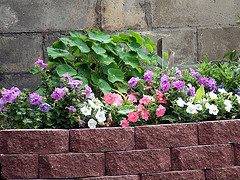
    Scale drawings are useful in lots of situations, but I’ve found them most helpful in home improvements and gardening.  (A quick sketch of my flowerbeds keeps me from overcrowding my begonias.)  And apparently, the city permits office wants to see them, too!

    (Wondering if I got my permit? I can proudly say, yes!  And I know for a fact that my scale drawing helped.)

    What math have you used in home improvements?  Is there a time when math got in the way of a home improvement project?

  • Open Thread Friday: What’s Your Math Question?

    Open Thread Friday: What’s Your Math Question?

    So when does math make you crazy in your everyday life?  Are there situations that make your hands sweat?

    On selected Fridays, I’ll host an open thread where you can ask your questions or share your specific frustrations with everyday math.  And if you see a question from someone else that you can answer? Go for it!  I’ll select questions for future posts here at Math For Grownups.  In those posts, I’ll show you easy ways to get around these frustrations.

    So let ‘er rip in the comments section.  Ask about fractions or grocery store math or the best way to place a bet on the ponies. Just remember that we’re not here to do your homework for you.  And leave your calculus, trig and diff eq questions for another blog.

    Whatcha got?

  • Math Secret #1: There’s More than One Way to Skin a Math Problem

    Math Secret #1: There’s More than One Way to Skin a Math Problem

    The more I talk to people about math, the more I hear this refrain: “I don’t like math, because math problems have only one answer.”

    Peshaw!

    Okay, so it’s not such a crazy idea.  Most math problems do have one answer (as long as we agree with some basic premises, like that we’re working in base ten).  But math can be a very creative pursuit — and I’m not talking about knot theory or fractals or any of those other advanced math concepts.

    I have a friend who is crazy good at doing mental math.  She can split the bill at a table of 15 — even when each person had a completely different meal and everyone shared four appetizers — without a calculator, smart phone or pencil and paper!  This amazed me, so I asked her how she does it.  And what I discovered was pretty surprising. She approaches these simple arithmetic problems in ways that I never would have thought of.  She subtracts to solve addition problems, divides to multiply.  And estimation? Boy howdy, does the girl estimate.  In other words, she gets creative.

    (She also has a pretty darned good understanding of how numbers work together, which is probably the biggest reason she can accomplish these feats of restaurant arithmetic.)

    While there may be one absolutely, without-a-doubt, perfectly correct answer to “How much do I owe the waiter?” there are dozens of ways to get to that answer.  Problem is, your fourth grade math teacher probably didn’t want to hear about your creative approach.

    See, when we learn math as kids, we’re focused on computation through algorithms.  (In case you’re not familiar with the word, algorithms are step-by-step procedures designed to get you to the answer.)  You did drill after drill of multiplication, long division, finding the LCM (Least Common Multiple) and converting percents to fractions.  But nobody ever asked you, “How would you do it in your head?”

    The good news is that now you’re all grown up.  There’s not a single teacher who is looking over your shoulder to see if you lined up your decimal points and carried the 2.  You can chart your own path!  And when people are given this freedom, they often find really interesting ways to solve problems.

    Don’t believe me?  Try this out: Add 73 and 38 in your head.  How did you do it?  Now pose the question to someone else.  Did they do something different?  If not, ask someone else.  I will guarantee that among your friends and family, you’ll find at least three different ways of approaching this addition problem.

    So, let’s do this experiment here.  In the comments section, post how you solved 73 + 38 without a calculator or paper and pencil.  Then come back later to see if someone else had a different approach.  If you’re feeling really bold, post this question as your Facebook status, then report the results in the comments section.

    And while you’re at Facebook, be sure to visit and like the Math For Grownups Facebook fan page!