Author: Math Expert

  • My Most Embarrassing Professional Moments Have Involved Math

    My Most Embarrassing Professional Moments Have Involved Math

    The first email came in at about 2:00 p.m.

    600 million divided by 660,000 equals a little over 909.

    The next a few moments later.

    5.4 billion people is nearly the population of the whole World (estimated at 7 billion in 2012 by USCB)

    “Well, shit,” I said aloud. It had happened again.

    As part of my virtual book tour for Math for Writers, Linda Formichelli (the original Renegade Writer) had offered me a great chance to reach out to her readers, through her “Monday Motivation” email. I penned a piece called “4 Math Mistakes Writers Make—and How You Can Avoid Them.”

    Unfortunately, there were 6 mistakes. Two of them were unintentionally made by little ol’ me. In the whirlwind of my virtual book tour, I had not edited carefully enough. I know what to do; I just didn’t take the time to do it.

    Honestly, this is my worst nightmare. If anyone else in the world had made these mistakes, I’d easily reassure them: “Math isn’t life or death! We all make mistakes, and the world still spins. [Tweet this]The thing is to learn from our mistakes and move on.”

    Easier said than done, apparently.

    I don’t know where I got my math performance anxiety. Perhaps it stems from my strong sense of perfectionism in some areas of my life. I’ve had that trait since childhood, and I see it in my daughter. It’s why I prefer sewing to woodworking — with fabric and thread, I can pull apart mistakes and start again. Wood is not so forgiving.

    Regardless, I must want to push through it. Why else would I choose two careers (teaching and writing about math) that put my math mistakes in the spotlight?

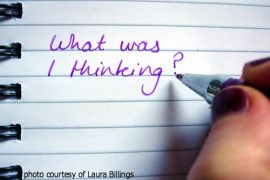
    Want to share this image? Go right ahead! Just right click, save and share.

    When I was a teacher, I had less of a problem with this issue. I told my students very plainly that I would make math errors. They were invited to correct me (nicely), and we would move on. (I had the same rule for spelling, which I really don’t care one whit about.) In the classroom, I saw my public mistakes as a teachable moment. Perfection is not required. Math is difficult, and we all screw up from time to time.

    In regards to my most recent public math mistakes, I’m not worried that someone thinks that 600,000,000 ÷ 660,000 = 9 or that a reader went away from my article believing that there are 5.4 billion people in the U.S. I’m worried that these readers lost trust in my ability to teach them something about math. It’s what I tell other writers all the time: If you get the math wrong, your readers can lose faith in you.

    But in the end I have to go back to my more gentle self. These mistakes happen — even to big wig mathematicians. (I’m not one of those, by the way.) If you made that mistake, I’d tell you not to worry about it. And in my line of work, I’d better get that message loud and clear. Because this is not the last public math mistake I’ll ever make. Not by a long shot.

    When I worried out loud about this yesterday, a dear friend and colleague told me, “Whatever. People love to point out others’ mistakes.” And she is right. It’s not that anyone has been mean about it — none of Linda’s readers were at all. It’s about connecting. I don’t need to feel ashamed or worried. I’m pretty sure Einstein would laugh and tell me to forget about it, too.

    Besides, I’m sure I’m not the only writer who is worried about making public math mistakes. Right?

    Do you have fears about making math mistakes — in public or elsewhere? Help me feel better, by sharing your story. Please?
  • Math at Work Monday: Aliya the staffing agency branch manager

    Math at Work Monday: Aliya the staffing agency branch manager

    With unemployment rates at record levels, temporary agencies are busier than ever.  I had the pleasure of speaking with Aliya Purtee who is the branch manager at Patrick Staffing, a temporary staffing agency.  She not only helps people get placed in jobs but also plays a big part in making sure people are paid.

    Can you explain what you do for a living?

    I am a branch manager and a payroll specialist at a staffing agency.  As branch manager, I oversee three employees.  An aspect of my role is to listen to the needs of the staff,  and then I ensure that my staff fulfills their needs.  A big part of my job is processing  payroll for about 100 employees each week. This includes checking time cards to make sure there are no additional errors. Also, I engage with approximately 50 customers per week and then our branch takes applications five days a week.

    When do you use basic math in your job?

    I consistently use basic math skills in my job.  My job consists of calculating hours for payroll, pay and bill rates. Also, I use math to generate company’s markups and to determine a burden rate for worker’s compensation. I use the company’s markup to calculate pay rates and bill rates. Some companies pay a shift premium which also requires calculation.

    Do you use any technology (like calculators or computers) to help with this math?

    I use a calculator sometimes, but most of the time I do the figures in my head. I enter the figures into the computer. Also, I issue debit cards for the employees that do not have  direct deposit set up. After the time is entered, I print a report that allows me to audit my entries so that I can double check for mistakes.

    How do you think math helps you do your job better?

    If I did not have basic math skills, I could not fulfill my duties at work.

    How comfortable with math do you feel?

    I am very confident with my math skills.  In my current position I cannot make errors.  If I do, they can have large consequences.

    What kind of math did you take in high school?

    In high school, I took algebra.  I did not like math in high school, and I refused to challenge myself with advanced classes. I really did not realize how much math is used in our everyday lives. [Tweet this]

    Did you have to learn new skills in order to do the math you use in your job?

    I did not have to learn new math skills at my job.

    The people who manage payroll could easily go unnoticed — until we didn’t get our paychecks! If you have questions for Aliya, post them in the comments section, and I’ll ask her.

  • Math for Writers Virtual Book Tour, Day 7

    Math for Writers Virtual Book Tour, Day 7

    Today, I’ve got a real treat for you. Over at www.writenowcoach.com, you can read an excerpt from Math for Writers — and it’s one of my most favorite sections. Yippee!

    And there’s more good news: writer and coach, Rochelle Melander, is giving away a copy of Math for Writers to one lucky winner. Visit my guest post for the details.

    So what’s this excerpt about? If you’ve faced BIG numbers that must go into a story, you might have wondered, “How can I do this without completely losing my readers?” The answer is so simple and so creative. Create metaphors that help you break the number down into manageable pieces. Bonus points, if these comparisons are really visual.

    On Rochelle’s blog, I give really clear examples of how this is done. I guarantee that once the juices get flowing, you’ll be inspired to do this on your own!

    Make Numbers Come Alive

    Rochelle Melander is an author, speaker, and certified professional coach. She is the author of ten books, including the National Novel Writing Month guide—Write-A-Thon: Write Your Book in 26 Days (and Live to Tell About It). Rochelle teaches professionals how to turn their ideas into books, navigate the publishing world, and connect with readers through social media. She is the founder of Dream Keepers, a writing workshop for at risk tweens and teens in Milwaukee. For more tips and a complementary download of the first two chapters of Write-A-Thon, visit her online at www.writenowcoach.com

    Laying the foundation for fiction and nonfiction writers alike to write a book in less than a month (and survive), Write-A-Thon provides the blueprint to do it all and survive! Write-A-Thon contains three sections: Training, Write-A-Thon, and Recovery. Each section utilizes introductions, brief valuable essays filled with practical tools, and just enough encouragement for the writer to press on and finish what may very well be the challenge of their life (or simply the challenge of the month). Perfect for accomplished authors or those who simply writeWrite-A-Thon provides the complete guidebook for brainstorming, writing, and finishing that book.Save

  • Math for Writers Virtual Book Tour, Day 6

    Math for Writers Virtual Book Tour, Day 6

    Today, I’m hanging out with Marcia Layton Turner and Sandra Beckwith, founders of www.informationproductsforwriters.comNot sure what an information product is? Let me help you out there.

    If you have a great bit of information that others in your field value, you can develop an information product that features this valuable information and either give it away (to build your email list) or sell it. Information products run the gamut from e-books to case studies to apps. But personally, I find spreadsheets to be the hottest information products out there. Unlike other documents, spreadsheets are dynamic. With the right mix, they can be pure gold.

    Get the details on Marcia and Sandy’s site. (Click on the headline below.)

    Create a Spreadsheet-Based Information Product

    Sandra Beckwith is a national award-winning former publicist who now teaches authors how to promote, publicize, and market their books. Get tips and how-to information in her free Build Book Buzz e-newsletter at http://buildbookbuzz.com. Connect with her on TwitterGoogle+LinkedIn, and Facebook.

    Marcia Layton Turner is a bestselling author and founder of the Association of Ghostwriters. Learn more at http://www.associationofghostwriters.org. Together with Sandy Beckwith, she shares tips and guidance on creating and selling information products at http://www.informationproductsforwriters.com.

  • Math for Writers Virtual Book Tour, Day 5

    Math for Writers Virtual Book Tour, Day 5

    Productivity has been on my mind a lot lately. Last fall, I decided I was going to figure out (once and for all) how I can be more productive in my work and family life. I read tons of books and really thought about lots of aspects of productivity — like when I have the most energy and the types of projects that make me the happiest. But much of the advice I received was geared towards people working regular 9-to-5s.

    Imagine how thrilled I was to come across John Soare’s blog Productive Writers. Here, in one place, was advice directed just to me! It was like the icing on the cake, and I eagerly devoured the advice he gave.

    As a mathy, I know that a few calculations could help me maximize my productivity. (Some of that advice is in my book, Math for Writers.) So I asked John if he’d like a guest post about merging income and career goals. In this post, I look at how you can use your income goals to make significant decisions about your career — like working only 11 months out of the year or writing a book.

    Click here to read Merge Your Income and Career Goals

    About John Soares

    John Soares has been a freelance writer since 1992. He’s completed over 300 projects for college textbook publishers, written over 100 outdoors articles for magazines and newspapers, and authored three hiking guidebooks, including 100 Classic Hikes in Northern California, third edition. He discusses writing, marketing, and time management at ProductiveWriters.com. At ProductiveWriters.com, John Soares shows freelance writers how to get high quality work done quickly, how to get paid well, and how to market their products and services.

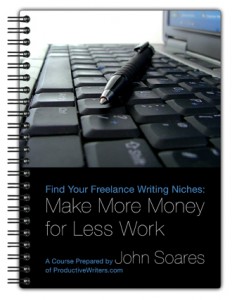
    About Find Your Freelance Writing Niches

    What if you could meet your income goals while only working 20-30 hours a week? What would you do with that extra time? Spend it with your family and friends? Get more exercise? Travel? Or, if you want, work more and sock the money into savings or pay down your credit cards or squirrel it away for your kids’ college education. John’s online, self-paced course, Find Your Freelance Writing Niches: Make More Money for Less Work, offers freelance writers the secrets of specializing, including why you should specialize, how to find your niche and what to do once you choose a specialization.

  • Math for Writers Virtual Book Tour, Day 4

    Math for Writers Virtual Book Tour, Day 4

    Today, I’m hanging out with the uber-cool super-writer, Kelly James-Enger. Her book, Six-Figure Freelancing: A Writer’s Guide to Making More Money was one of the first I read when I started my freelance writing career all those years ago. This book was so important to my career that I was star struck when I met her at an American Society for Journalists and Authors (ASJA) conference three years ago. We had such a blast, checking out restaurants and hanging out between sessions. She made me laugh so hard!

    I know that Kelly has had an influence on countless other new — and seasoned — freelancer writers. So I’m thrilled to be her guest at Dollars and Deadlines, her blog about the business of freelancing. There, I answer the question many writers have for me: Why do writers need math at all?

    Click here to check out my conversation with Kelly James-Enger

    About Kelly James-Enger

    About Six-Figure Freelancing

    Forget writing for the thrill of seeing your name in print, or worse yet, for the “exposure.” Freelancers should be paid-and paid well-for their work. If you dream of making a good full-time living or a second income as a freelancer, you need more than writing ability. You need a businesslike mindset, the ability to locate and pitch lucrative markets, efficient work habits, and solid relationships with people in your industry. During the author’s first year of full-time freelancing, she only made $17,000. But by her sixth year, she cracked the six-figure mark. After interviewing dozens of other six-figure freelancers, the author first published Six-Figure Freelancing: The Writer’s Guide to Making More Money in 2005. Now the book’s been revised and updated for its second edition.

    About Six-Figure Freelancing

    Forget writing for the thrill of seeing your name in print, or worse yet, for the “exposure.” Freelancers should be paid-and paid well-for their work. If you dream of making a good full-time living or a second income as a freelancer, you need more than writing ability. You need a businesslike mindset, the ability to locate and pitch lucrative markets, efficient work habits, and solid relationships with people in your industry. During the author’s first year of full-time freelancing, she only made $17,000. But by her sixth year, she cracked the six-figure mark. After interviewing dozens of other six-figure freelancers, the author first published Six-Figure Freelancing: The Writer’s Guide to Making More Money in 2005. Now the book’s been revised and updated for its second edition.

  • Math for Writers Virtual Book Tour, Day 3

    Math for Writers Virtual Book Tour, Day 3

    Today, I’m the guest of Marketing Wizard and coach, D’vorah Lansky of www.bookmarketingmadeeasy.com. In this audio interview, we discuss the math behind good book marketing — how to measure platform and keep track of marketing successes — as well how Math for Writers came about. Like me, D’vorah is a former public school teacher, so we even talk about how many of us developed our relationship with math.

    Don’t miss this great conversation!

    D’vorah Lansky, M.Ed., Author, and Marketing Wizard

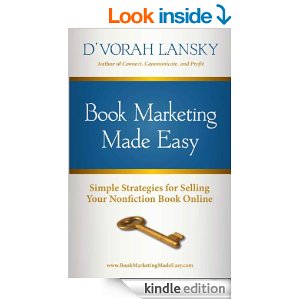
    D’vorah Lansky, known as “the marketing wizard” has a Master’s Degree in education and has been marketing online and mentoring leaders since 1994. She has published two books: Connect, Communicate, and Profit: Build Successful Business Relationships Online and her newest book, an Amazon Bestseller, Book Marketing Made Easy: Simple Strategies for Selling Your Nonfiction Book Online.

    D’vorah is also the co-author of Building Relationships that Build Business, Chicken Soup for the Network Marketer’s Soul, Corporate Mom Dropouts, and Ignite Your Passion. D’vorah coaches and trains authors on online book marketing strategies and practices. She is passionate about online marketing as well as helping authors grow their business and their brand. Click here to view her work: http://DvorahOnAmazon.com

    Book Marketing Made Easy: Simple Strategies for Selling Your Nonfiction Book Online

    In Book Marketing Made Easy you will learn how to: increase your credibility and be seen as an expert in your field; sell more books to people who will benefit from your message; create multiple sources of income with the content of your book; harness the power of multimedia marketing to reach more people; and use social media to increase your influence and expand your market.

  • Math at Work Monday: Sarah the Recycling Truck Driver

    Math at Work Monday: Sarah the Recycling Truck Driver

    You probably see your recycling truck driver every week and yet never think about the ins and outs of their job.  Sarah Penrod is one of those faithful people who picks up your recyclable goods on a regular basis so that you can help make the world a little greener.  I found it interesting to hear about her job.

    Can you explain what you do for a living?

    I work for South Utah Valley Solid Waste District. I drive a roll-off truck, and I haul recyclable cans and deliver compost. I also work the scale which weighs trucks as they come in and out.

    When do you use basic math in your job?

    We use math a lot in conversions. We convert pounds into ton and then calculate the price per ton. I also use geometry when I am loading or taking the container off my truck. I have to make sure that I have the right angle so the can is able to slide off correctly rather than on its side.

    Do you use any technology (like calculators or computers) to help with this math?

    We use a computer to convert most of the weights and dollar amounts for us, but I use geometric principles in my head.

    How do you think math helps you do your job better?

    I have to understand and know my angles and conversions in order to do my job effectively.

    How comfortable with math do you feel?

    I feel comfortable with basic math, but anything beyond algebra would require some refresher courses.

    What kind of math did you take in high school?

    I took Algebra and Geometry.

    Did you have to learn new skills in order to do the math you use in your job?

    No, the math was something that I already knew.

    There may be more you’d like to know about Sarah and the job of driving a recycling truck.  This is something you may not have given much thought before. Now that you’re thinking…if you think of anything else you’d like to ask Sarah, just let me know and I’ll catch her in between routes.

  • Math for Writers Virtual Book Tour, Day 2

    Math for Writers Virtual Book Tour, Day 2

    Today, thanks to Jennifer Lawler, you’ll get a sneak peek inside Math for Writers, with an excerpt about self-publishing.

    From Jennifer:

    My buddy Laura Laing is kindly allowing me to run this excerpt from her book for writers:Math for Writers: Tell a Better Story, Get Published, Make More Money. 

    I’ve known Laura for years as a colleague, and I had the opportunity to work with her on her first math book (Math for Grownups), which is how I learned to stop hating math. Laura is a fabulous teacher and she’s the reason why I didn’t quail when I had to factor some quadratic equations for a project I’m working on (I kid you not. You have no idea the weird and random projects that land on my desk.)  I knew I could do it because she taught me to have more confidence, and to recognize that there are usually many ways to solve a problem.

    Anyway, I’m pleased to offer this excerpt, which will help you  figure out how to calculate the numbers involved in self-publishing.

    Going It Alone: The Math of Self-Publishing

    Jennifer Lawler is the author or coauthor of more than forty books, mostly nonfiction, including her popular and award-winning Dojo Wisdom series (Penguin). She has written a number of romances under three pen names.

    She works as a book development editor and has taught classes on how to write a book proposal for many years. A number of her students have gone on to land publishing deals. She has also worked as a literary agent and as an acquisitions editor, giving her considerable experience on both sides of the publishing process.

    She earned her Ph.D in medieval English literature from the University of Kansas and a black belt in Taekwondo at approximately the same time. She has not quite decided which has been more useful.

    I heartily recommend Jennifer’s newest offering: Finish Your Book Bootcamp ecourse. If you have half a manuscript and are not sure how to get it finished, this is the course for you. Jennifer has the perfect mixture of kind encouragement and solid, market-tested feedback. I know that for a fact, because she edited both of my books!

    I really want you to join me. Really, I do.

    So much so, that I’m offering a special gift to those who come along for the ride. Just visit my guest posts to learn how to to claim your gifts.

    So, let’s hit the road!

  • Gas Up! Join the Math for Writers Virtual Book Tour

    Gas Up! Join the Math for Writers Virtual Book Tour

    Now that Math for Writers is out, it’s time to share the good news. That’s why I’m appearing in lots of different places all over the interwebs. And I hope you’ll join me.

    Yep, I’m hittin’ the road for a virtual book tour.

    I’m starting off with a bang — as a guest on two wonderful writers’ blogs.

    No spin zone: How reporters can find reliable statistics sources

    WordCount: Freelancing in the Digital Age has been rated by BlogRank as a top U.S. blog. It’s also part of the BlogHer Publishing Network. It was founded and managed by Michelle Rafter, a freelance business reporter, editor and editorial project manager. Her work has appeared in MSN Money, OC Register, Westways, Edmunds.com, the Wall Street Journaland other national publications.

    Social Media Data Tracking for Authors in 4 Easy Steps

    Sandra Beckwith is a national award-winning former publicist who now teaches authors how to promote, publicize, and market their books. Get tips and how-to information in her free Build Book Buzz e-newsletter at http://buildbookbuzz.com. Connect with her on TwitterGoogle+LinkedIn, and Facebook.

    Going It Alone: The Math of Self Publishing (excerpt)

    Jennifer Lawler is the author or coauthor of more than forty books, mostly nonfiction, including her popular and award-winning Dojo Wisdom series (Penguin). She has written a number of romances under three pen names.She works as a book development editor and has taught classes on how to write a book proposal for many years.

    Math and Book Marketing

    D’vorah Lansky, known as “the marketing wizard” has a Master’s Degree in education and has been marketing online and mentoring leaders since 1994. She has published two books: Connect, Communicate, and Profit: Build Successful Business Relationships Online and her newest book, an Amazon Bestseller, Book Marketing Made Easy: Simple Strategies for Selling Your Nonfiction Book OnlineClick here to view her work: http://DvorahOnAmazon.com

    I really want you to join me. Really, I do.

    So much so, that I’m offering a special gift to those who come along for the ride. Just visit my guest posts to learn how to to claim your gifts.

    So, let’s hit the road!

  • Math at Work Monday: Michelle Matlock the Physician Assistant

    Math at Work Monday: Michelle Matlock the Physician Assistant

    Math is important in many careers, but one of the most critical is in the field of medicine.  For example, it’s very important for medicine to be dosed in correct amounts.  I’m thankful that Michelle knows her math since she is assisting physicians on a daily basis.  Even though I hope I don’t have to visit her… it’s good to know she’s there.

    Can you explain what you do for a living?

    I am a physician assistant. It is an advanced degree where I am able to interview, examine, order tests, perform minor procedures, assist in surgery, develop treatment plans and write prescriptions. Basically, I function much like a doctor.

    When do you use basic math in your job?

    All the time. I have to quickly convert pounds to kilograms because a lot of medicines are dosed in kilograms. This is especially important in trauma situations. Many medicines are weight-based like 50mg/kg divided in 3 doses per 24 hours. It gets complicated. I’m thankful that I don’t work in pediatrics because there are further calculations involving liquid and then interpreting the directions into teaspoons/mL/cc so that it makes sense to the parent based on the measuring device that is accessible to them.

    Do you use any technology to help with this math?

    Yes, I use calculators. I also use paper and pencil the old-fashioned way to visualize the conversions. Electronic medical record has settings that help and alert you if what you are ordering doesn’t make sense.

    How do you think math helps you do your job better?

    I don’t know about better, but it’s necessary.

    How comfortable with math do you feel?

    I rarely feel comfortable, but I feel safe that there are resources available to check my work so that I don’t make mistakes.

    What kind of math did you take in high school?

    I took Algebra, Geometry, and Algebra II.

    Did you have to learn new skills in order to do the math you use in your job?  

    No, not really. Occasionally I have to brush up on statistics in order to interpret research or scholarly articles and data. There isn’t much of a role for advanced math, such as trigonometry, in my daily job.

    Questions for Michelle?  Let me know, and I’ll ask her!

  • Is This Conference Worth It?

    Is This Conference Worth It?

    The right writer’s or business conference can be a boon to inspiration and the bottom line. No matter the cost or time commitment, a conference can be an invaluable investment. But most of us can’t afford to go to all of them – or even more than two or three a year. How can you evaluate whether a conference is right for you?

    When I can’t make up my mind, I’m big on creating measures. How much would this opportunity cost me — in time or money? What can I expect to get out of the experience? In short, I’m looking at ROI or return on investment. To calculate ROI, you need to know what your variables are.

    Expenses

    First off, you need to calculate how much of your cold, hard cash you’ll need to give up to attend. (That’s simple addition.) Of course, unless the conference in your living room, there will be costs other than the conference fee. Make sure you include expenses like travel, housing, and food.

    If the total is spendy, get those costs down to a minimum. Here are some ideas:

    1. Reserve your spot early. Some conferences offer early-bird rates. After a certain date the rates go up, and so do your costs. Whenever possible, plan ahead.

    2. The same goes for travel and housing costs. Travel arrangements booked at the last minute are more expensive. And if you can grab a spot at a neighboring hotel — or bunk with a friend or relative — you might just save some dough.

    3. Check to see if the conference includes meals. If there’s no breakfast offered, for example, pack something to munch on in your room, or make plans to grab some fruit, granola and yogurt at a nearby bodega or grocery. If you like to have a glass of wine at the end of the day, bring or buy a bottle to save on costs in the hotel bar.

    4. Some hotels offer free wifi — others don’t. Prepare to be online during the conference and bring your own hotspot connection, if the hotel wifi fees are too high.

    Time

    So you’ve figured out how much money you’ll probably spend. But that’s not the only consideration. If you’re going to be away for four or five days, you’ll face three realities: 1) working extra hours to get ahead before the conference, 2) working during the conference, or 3) working extra hours after the conference.

    Of course there’s a fourth option, too: Turning down work that would be due during your travel time or soon after.

    There are several ways to consider the value of your time at the conference.

    1. Using your hourly rate, estimate the amount of money you’ll “lose” by being at the conference. (But remember, this may not be an accurate assessment. Would you be billing all of the hours that you’ll be hob-knobbing with industry experts?)

    2. Consider your financial goals for that month, week or quarter. Can you meet those goals before or soon after the conference?

    3. What is your really busy time? If you are slammed from April through June, a May conference may not be in your best interest. In essence, your time is much more valuable when work is flowing like crazy.

    Opportunity

    Cost and time are easy to measure. But opportunity is the wild card. I know many, many freelance writers who start at a conference with a dollar figure in their heads. If they don’t land at least that much in assignments before arriving back home, they’ll reconsider attending in future years.

    That’s a fine way of doing things, but I think the market has changed. There aren’t too many editors who are assigning on the spot. And thanks to major cuts at major magazines, many editors (major and minor) cannot justify the cost of attending conferences.

    So I encourage you to consider the opportunity of networking. Can you leave with five new contacts (other writers, editors, publishers — not the bartender) and follow up within a week of getting home? Can you come up with 10 new ideas, whether they’re stories, informational products or blog posts? Do you have a book to promote?

    Finally, ask yourself this: “How much would I pay for a course that teaches me X?” If the conference offers you information that you would need to pay for elsewhere, it could be worth it.

    Whatever your conference formula is, strategically thinking about the benefits and costs is a good idea. You may choose to calculate a dollar figure for your ROI. And you may play it a little faster and looser. Either way, have a plan, and you won’t feel like you’ve wasted your hard earned money or precious time.

    April 24-26, I’ll make my annual trek to New York City for the American Society of Journalists and Authors convention. It’s not cheap to stay in a fancy hotel, but along with great networking, promotional opportunities and workshops, I consider this a little mini-vacation. So about half of the cost goes into my marketing/training budget for my business and the other half is part of my vacation fund. Works like a charm for me. 

    What conferences are you planning to attend this year? How do you decide which conferences are worth it? Share your ideas in the comments section.