Category: Math for Parents

  • Math at Work Monday: Tiffany the math teacher

    Today is the first day of school here, so I decided to repost this Math at Work Monday interview with Tiffany Choice, a middle school math teacher in Fairfax, Virginia. You might be a little surprised by how she uses math in her work!

    I know what you’re thinking. “It’s so obvious how a 6th grade teacher would use math! She’s teaching fractions and division and percents!”

    There’s always a lot more to teaching than the rest of us may think. And that’s why I asked Tiffany Choice to answer today’s Math at Work Monday questions.  Ms. Choice was my daughter’s 4th grade teacher, and she’s the best elementary math teacher I’ve ever met.  She truly made the math fun, and she really got into her lessons.  I know this for sure, because I had the pleasure of subbing for Ms. Choice while she was on maternity leave.  Let me tell you, those kids loved her — and so do I!

    Last year, Ms. Choice moved to Fairfax County, Virginia.  She’s getting ready to start teaching 6th grade there.  In honor of what was supposed to be our first day of school — until Hurricane Irene changed our plans! — here’s how she uses math in her classroom.

    Can you explain what you do for a living? I teach state-mandated curriculum to students. My job also includes communicating to parents progress and/or concerns, appropriately assessing my students, and analyzing data to drive my instruction and lessons.

    When do you use basic math in your job?  I use math all the time — mostly basic addition, subtraction, multiplication and division. When I plan lessons, I need to appropriately plan for activities that will last a certain length of time. Then, when I am teaching the lessons, I am watching the clock and using timers to keep my lessons moving or calculating elapsed time.

    I also use math to grade assignments and calculate grades. I break a student’s grade into 4 categories; participation, homework, classwork, test/projects. Each category has a different weight. Participation and homework are each 10 percent, while classwork and test/projects are each 40 percent. Then for each grading period, I average grades and take the appropriate percentage to get the overall grade.

    I also use math to analyze data and drive my instruction. After quarter assessments or chapter tests are given, I look for trends. Which questions did the majority of students get incorrect? If I notice out of 60 students only 30% of them got a certain question correct this says to me that most of them (42 to be exact) got the question wrong. I need to figure out why and go back.

    I will also use math to group my students for games and activities. When I originally plan for them I always assume all students will be present. However, with absences and such I have to use last-minute division to regroup them.  I move desks around into different groups periodically during the year, and that requires division as well.[pullquote]It’s completely normal to feel anxious or nervous about math. But a great teacher at any level (primary to college) will help you “get it.”  Just don’t give up.[/pullquote]

    When I plan for field trips, I have to calculate the total cost for each student depending on the fees involved. Then, I have to count large amounts money that has been collected to account for the correct amounts.

    Do you use any technology (like calculators or computers) to help with this math?  At my first teaching job, I had a computer program that calculated grades for me, but when I left and went to a new district I didn’t have that software, so I did grades all by hand using a calculator.

    How do you think math helps you do your job better? The whole point of my job is to get students to learn and become great thinkers. I wouldn’t be able to find or focus on areas of weakness if I wasn’t able to properly analyze data and comprehend what it really means to me.

    What kind of math did you take in high school?  Did you like it or feel like you were good at it? I only took algebra and geometry in high school. I was terrible at math in high school and didn’t enjoy it or “get it” until college. I started in a community college and I had to take two developmental math classes before I could take what was required. It was during those developmental courses I finally “got it” and began to actually enjoy it. Everything finally made sense.

    It’s completely normal to feel anxious or nervous about math. But a great teacher at any level (primary to college) will help you “get it.”  Just don’t give up.

    Did you have to learn new skills in order to do this math? The math I use to do my job is math that is taught up to the middle school level. I didn’t have to learn anything special.

    Thanks so much, Ms. Choice!  (I don’t think I can ever call her Tiffany!)  If you have questions for Ms. Choice, just ask them in the comments section.  She has agreed to come back to Math for Grownups to talk a bit about how parents can work with their kids’ math teachers, so stay tuned for more advice from her.  
  • Common Core Common Sense: Myths About the Standards, Part 4

    Common Core Common Sense: Myths About the Standards, Part 4

    In recent months, there’s been a tremendous amount of buzz regarding an educational change called Common Core. And a ton of that buzz perpetuates down-right false information. There’s so much to say about this that I’ve developed a five-part series debunking these myths — or outright lies, if you’re being cynical. This is the fourth in that series (read Myth 1Myth 2 and Myth 3), which will continue on Wednesdays throughout August and into September. Of course, I’ll be writing from a math perspective. Photo Credit: Watt_Dabney via Compfight cc

    Myth #4: The Standards Require More Testing

    Perhaps the most controversial aspect of the U.S. education system is standardized testing. And for good reason. There are a myriad of problems with these tests–from their links to private companies to their use as teacher evaluation tools.

    While I’ve said from the start that it’s not fair to judge the Common Core Standards based on their implementation in individual states, it’s also not fair to pretend that the standards and testing don’t go hand in hand. States aren’t abandoning standardized testing any time soon, so don’t hold your breath.

    But what we do know for certain that the adoption of Common Core Standards does not mean more testing–in the long run. In fact, there is no testing requirement inherent in the adoption of Common Core. None!

    However, as states move from previous standards to Common Core, there will be some changes in testing. First, student may take two sets of standardized tests–at first. In these situations, one test is the one aligned with the state’s previous standards. And students may take practice tests, based on the Common Core Standards. Usually this translates to more testing during one school year, with only one test score used for student placement or teacher and school evaluations.

    Because the Common Core Standards focus on critical thinking, Common Core-aligned tests will probably look a little different than the all-multiple choice tests that we’re all used to. Students are required to show their work and may even be asked to explain how they came to their answers. Here’s a two-part example, which corresponds with the third grade math standards:

    A. Fill in the blanks below to make a number sentence that represents the drawing:
    ________ x ________ = ________
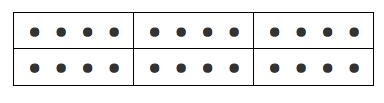
    B. Put the dots below into five equally sized groups and write an equation that represents the drawing.

    •  •  •  •  •  •  •  •  •  •  •  •  •  •  •  •  •  •  

    Answers:
    A. 4 x 6 = 24 or 6 x 4 = 24 or 8 x 3 = 24 or 3 x 8 = 24, etc.
    B.   •  •  •      •  •  •      •  •  •      •  •  •      •  •  •      •  •  • 
    3 x 5 = 15 or 5 x 3 = 15 or 15 ÷ 3 = 5 or 15 ÷ 5 = 3

    There’s something going in the above problems that’s difficult (or impossible) to measure with multiple choice questions. First, students are asked to draw as a way of problem solving. Second, there are multiple correct answers.

    (Psst. Want to test your third grade or fifth grade math skills? Take one of the Math for Grownups math quizzes. No one has to know your score. Promise!)

    So while Common Core does not eliminate testing or prevent test results from being used inappropriately, if the tests are well constructed–and dang, that’s a big if–students have a much better opportunity to demonstrate critical thinking and the open-ended nature of mathematics. That’s not more testing, that’s better testing.

    Got a question about the Common Core Standards for Mathematics? Please ask! Disagree with my assessment above? Share it! And if you missed Myth #1, Myth #2 or Myth #3, you can find the herehere and here.

  • Math at Work Monday: Samantha the Freelance Designer

    Math at Work Monday: Samantha the Freelance Designer

    I had the pleasure of speaking with Samantha Volz who has the pleasure of working from her very own home every day. That is one of the benefits of being a freelance designer. In addition to graphic design, this artist also does photography. It seems she is creatively blessed with talent.  I was curious about how she uses math in her work. Let’s take a look at what she had to say:

    Can you explain what you do for a living?

    I’ve been working as a freelance designer since 2001.  I design marketing/advertising material for companies. In addition, I also design websites and other support files for social media applications. I am a photographer, painter, and artist as well.

    When do you use basic math in your job?

    I have to use specifications to set up design files. Set up bleed, trim and safe zones so that when the file gets to the printer, it is set up correctly and prints correctly. For instance, if I have a print sheet that is 8.5 by 11 inches for a trifold brochure, I need to divide the paper by three and adjust 1/8th of the 3 panel. Depending on how the trifold folds, I will need to adjust the panels 1/16th of an inch if a panel folds in. Then, on the layout in the software I have to consider set up for a printing press or digital printing if my graphics bleed to the edge I have to add at least 1/8th to 1/4th of an inch of graphics that extends past the actual final layout for being trimmed down to allow for machine error. So my final file that is handed over to the print vendor is 8.5 x11 with bleed 1/8th bleed on all sides. Total graphic coverage is 8.75 x 11.25 trimmed down to 8.5 x 11 and scored for folds indicated on the set up with 3 panels roughly 3.66 ” wide, again depends on the fold design chosen for that tri-fold brochure how it will read, flow and open up to reveal the information being provided.

    Do you use any technology (like calculators or computers) to help with this math? Why or why not?

    Yes, I use a calculator a lot.

    How do you think math helps you do your job better?

    I could not do my job without it. It is how everything flows from the client to me, the designer, and then to the printer until it is produced as an end product.

    How comfortable with math do you feel? Does this math feel different to you?

    I am comfortable with normal addition, subtraction, division, multiplication, and fractions. Nothing too complicated.

    What kind of math did you take in high school? Did you like it/feel like you were good at it?

    I took honors math classes.

    Did you have to learn new skills in order to do the math you use in your job? Or was it something that you could pick up using the skills you learned in school?

    Yes, what I use now I learned in high school.

    Who knew that the creative type still need to know their basic calculations and fractions?  Seems like everywhere you go, even in your home, math is sure to follow. I hope you enjoyed learning a little more about Samantha. Let me know if you have any further questions for her. 

    Photo Credit: 55Laney69 via Compfight cc

  • The Arithmetic of Allowance

    The Arithmetic of Allowance

    I wrote the following post for Simply Budgeted last August. Given our topic this month, I thought I’d share it as a great example of how parents can extend learning outside the classroom. Enjoy!

    You probably find it pretty darned easy to encourage literacy.  In fact, there are countless magazine articles and books and workshops out there on this very subject.  And so all good parents read to their kids every night, play word games with them, give them magnetic letters for the fridge.

    But what about math?  If you’re like most parents, the idea of working math into the day probably seems down right daunting.  Scary even.

    It’s not as hard as you think, especially if you’re willing to give into your children’s demands for a regular allowance.  Money is an instant math lesson—and can motivate even the most reluctant student (adult or child).

    Here’s how:

    The Even Split: If you want to use allowance to encourage savings and charitable giving, you’re at least half way there.  One way to do this is to require kids to split their allowance into three equal accounts: spending, saving and giving.  If your five year old gets $3 per week, $1 goes in each pot.  But what about the kid who gets $6 a week?  Or worse, $10 a week?  Pose these questions, and let your child figure it out.

    The lesson: Factoring and division

    Percent, Per Week: For a more complex math problem, consider uneven distributions, say 20% spending, 20% giving and 60% saving.  Or encourage your child to put aside a certain percent of savings for a particular goal, like a new iPod.  Or enforce a different distribution around the holidays, when she buys gifts for her friends.  If she can’t do the math, she doesn’t get paid!

    The lesson: Percents

    Accounting for Savings: If you have a little investor on your hands—and some of us do—show him how to create a simple register for recording his savings and spending.  He’ll get a first-hand look at how his stash can grow (or shrink).

    The lesson: Addition and subtraction

    Project Savings: Your child will inevitably want something she can’t afford.  In that situation, help her figure out when she’ll have enough money in savings.  Can she wait that long?  If not, consider giving her a loan, with interest and a regular payment plan.  Show her how the interest is calculated and even help her figure out the total interest on the loan.

    The lesson: Using formulas and problem solving

    Math may be hard for you, but with a little bit of creativity allowance can help your kids practice their skills—and become a little more savvy with their own money.  Now all you have to do is remember your kids’ payday.

    How have you used allowance as an impromptu (or regular) math lesson? Share your stories in the comments section.Save

  • Math Mnemonics: How I Memorized My Daughter’s Cell Phone Number

    Math Mnemonics: How I Memorized My Daughter’s Cell Phone Number

    Until Wednesday, I didn’t know my daughter’s cell phone number. Yes, she’s had this number for a year. Yes, I’m lazy, choosing to depend on my own cell phone directory. And yes, memorization is not my best friend.

    But I should know my daughter’s cell phone, right? If I needed to reach her using someone else’s phone, I’d be up a creek.

    So I memorized it. And it was easy, and even a little fun. That’s because she and I both noticed a relationship between the last four digits in her cell phone number. Here, see if you notice it, too.

    1628

    See anything interesting in there? We did. First off, I noticed that 6 + 2 = 8. I crowed about that for a little bit, until my daughter asked how I was going to remember the 1. Suddenly, it hit me like a train. Duh.

    16 = 2 • 8

    Cool, huh? And you might even notice more interesting connections. (Share them in the comments section if you do.)

    My point is this: Simple math can help you remember important details, like your phone number or license plate or even Social Security Number. Whenever you need to memorize a number, look at the math.

    Here are a couple of additional examples. Do you notice any patterns?

    491-625

    1587

    These connections can also be geometric — for the more visual of us. Consider this house number: 2684. Ring any bells? If not, picture the touch pad of a telephone? Now do you get it? (When you press the numbers in order, you create a diamond.)

    Believe it or not, these little tricks are great ways to keep your budding Einstein’s math brain humming over the summer months. You can even play road-trip games just by noticing patterns.

    So share your mathematical mnemonic tricks in the comments section. How has simple arithmetic or geometry helped you remember a number? I’ll bet every one of you has a story to tell.

    What patterns do you notice in 491-625 and 1587? Share in the comments section.

  • Let the Boys of Summer Review Math with Your Kid

    Let the Boys of Summer Review Math with Your Kid

    The first professional baseball game I attended was at Tiger Park. I don’t remember who Detroit was playing that night, but I do remember the score card and tiny golf pencil I was given. I wasn’t (and still am not) a baseball fan, but I did love keeping track of the runs and outs on my score card.

    That was also my introduction to the role that math plays in baseball. On Monday, Charlie Vascellaroexplained this in his Math at Work Monday interview. Between a player’s batting average and games back, this math helps fans (and team managers and sports writers) understand how well players and teams are performing.

    If your kid is a baseball nut, this could be just the thing that can help keep skills sharp over the summer months. Instead of simply reading about these stats, how about teaching your kids to actually calculate them? Here’s how:

    Batting Average

    First up, ask your kid to tell you what he thinks a batting average is. What kind of math does he think will be involved?

    Yep, he ought to notice the word “average.” Kids learn to find an average — or mean — in elementary school. A child in fourth grade or older should be able to tell you that the process involves three things: counting, adding and dividing.

    A batting average is easy to find:

    number of hits ÷ number of official at-bats

    In other words, you’ll divide the total number of hits by the total number of times the player has (officially) been at bat. The answer is rounded to the nearest thousandth (or three places to the right of the decimal point. Easy peasy, right? Try it out.

    In the last seven days, Mike Trout of the Los Angeles Angels had 23 at bats and 6 hits. What’s his batting average?

    6 ÷ 23 = .261

    Follow up questions: What does the batting average mean? If someone has a low batting average, what can you say about his skills as a hitter? What does a high batting average mean? What happens to a player’s batting average, if over the season he gets more hits in each game? Could a player’s batting average be zero? Why or why not? Could a player have a batting average if he didn’t have any at-bats? Why or why not?

    Skills reviewed: division, decimals, rounding

    Earned Runs Average (ERA)

    In case you didn’t know — and I didn’t — an earned run is when a pitcher allows a batter to score. The earned runs average is the average number of times a pitcher allows runs in a game. Here’s the formula:

    (number of earned runs • 9) ÷ number of innings pitched

    Again, we’re dealing with an average, so it’s important to know that division is going to be involved. And if you look at that formula, you might notice another important concept: the order of operations. We’ve had quite a lively discussion about the order of operations or PEMDAS on the Math for Grownups facebook page.* In September, I’m going to demonstrate another way to remember what order is necessary for these operations. But for now, let’s just stick with Please Excuse My Dear Aunt Sally or Parentheses, Exponents, Multiplication, Division, Addition and Subtraction.

    Since the multiplication is in parentheses, do that operation first. Then divide. (Okay, so really you don’t need the parentheses at all, but it’s easier to write these problem online using them.)

    Here’s an example:

    In the last seven days, Jordan Zimmermann of the Washington Nationals has had 2 earned runs and pitched 11.7 innings. What is his ERA?

    (2 • 9) ÷ 11.7 = 1.54

    Follow up questions: What does a big ERA indicate? What about a small ERA? Can you explain why? If you did the division before the multiplication, would you get the same answer? Why or why not? Could the average ever be zero? Can a pitcher have an average if he didn’t pitch a single inning? Why or why not?

    Skills required: order of operations, multiplication, division

    There are many other baseball stats that require math, like baserunning average, fielding percentage, slugging percentage and games back.  In addition, you can take a look at a player’s stats over time and see how they’ve improved or declined. And of course, it’s interesting to compare the stats between players. If you’re unsure of the math, just google the terms!

    What are some other ways to use sports for math review? Share your experiences in the comments section.

    *Have you liked Math for Grownups on facebook yet? If not, what’s stopping you?

  • 5 Ways Pinterest Can Help Stop the Summer Slide

    5 Ways Pinterest Can Help Stop the Summer Slide

    I joined Pinterest last spring. I knew it was dangerous. The internet is like Alice’s rabbit hole for me — once I go down it, it’s near impossible to get back out. But I’ve found that I love using Pinterest. It inspires me and helps me stay organized. (One little click, and I’ve filed away an idea for later!) And because I’m a very visual thinker, I find that organizing my online life with Pinterest is much easier than using traditional bookmarks.

    I’m also a hopeless DIYer (hopeless in that I can’t stop trying these projects!), so my boards are filled with recipes, home projects and sewing ideas. And — you saw this coming — all of these require some math. I noticed that any one of these projects could be useful to a parent trying to stop the summer (math) slide, and I started collecting ideas.

    You can view my Stop the Summer (Math) Slide board here. (If you’re not following me on Pinterest, what’s stopping you?) Take my ideas to create a board of your own. Then add to it. I’ve outlined a few of my absolute favorites below. Please share yours in the comments section!

    1. Make a circle skirt.

    This was actually a Spring Break project that, thanks to MADE, I did with my daughter and some of her friends this spring. I’m particularly tickled with how MADE describes the math behind drawing the circle. (Suggestions: Unless you’re a very experienced sewer, avoid slippery fabrics. And if you have a serger, boy-howdy is that helpful!)

    2. Find your fuel economy.

    Your child can help you track your car’s miles per gallon. This site shows you how (and includes some other nifty tools). But really all you need to do is divide the number of miles traveled by the number of gallons used. (Remember: per means to divide.)

    3. Build a tomato trellis.

    I featured this project on my blog in June, but it’s well worth mentioning again. The beauty of this idea is that it brings in some higher-level math, like the Pythagorean Theorem and right angles. (But don’t worry, it’s not hard math.)

    4. Paint a room.

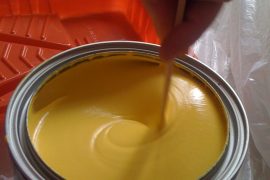
    Last year, my daughter wanted to repaint her room. I said fine, on two conditions. She had to figure out how much paint was required, and she had to help (a lot). This site shows, step-by-step, how to calculate the paint needed.

    5. Use coupons.

    In this economy, everyone needs to save some cash. Coupons are a great way to reinforce math skills, like estimation and basic operations.

    I’ll continue to add to this board, so check back from time to time and see what’s there. If you create something similar, please share it on the Math for Grownups facebook page or here in the comments section. I’d love to write another post later about what you guys have come up with!

    What are your favorite projects to do with kids? How is math involved? Share your ideas in the comments section.

  • Roll with It: Get Sneaky with Math

    Roll with It: Get Sneaky with Math

    I’ve written about this in a hundred different places, but it’s worth saying again: Parents know how to get their kids interested in reading. But in general, they don’t have a clue about math.

    If you had a child in the last 10 years in the United States, you probably heard somewhere along the way how important it is to read to said child every single day. I started reading to my daughter when she was only a couple of months old, partly to establish a bedtime routine (for the both of us) and partly because I wanted her to fall in love with books at a very young age. Reading with our children helps reinforce the parent-child bond and is a super-duper easy way to spark neurons that lead to mega brain development.

    And did I mention that reading to our kids is easy? And can be a lot of fun? (How many of us read Harry Potter aloud every night for a few years?)

    Sneaking in some math is a little more of a challenge for most parents. But I promise, it can be as easy — and is abso-tootin’-lootly as important as reading to our kids. Not only does math help our kids understand the world around them, but reinforcing the concepts kids learn at school helps counteract the summer slide or brain drain.

    But for a parent who isn’t so confident in his or her math skills, this prospect could be quite daunting. Or downright confounding. I could give you a list of ways to sneak in some math on a hot, summer day. But let’s see if you can come up with some ideas on your own. It all starts with a few questions:

    1. Think about your day from start to finish. Mentally go through it bit by bit, and see if you can come up with five ways you used math. How do you use math in your everyday life?

    2. Now, take one of those examples and consider the math. What process did you follow to solve the problem?

    3. Examine that process even closer. What math did you use in the process? 

    4. And finally think like your kid (not any kid, but your kid). How could you make your experience meaningful to your child? How would you explain the math that you did?

    Try this out for a few days. Write things down if you want or keep it all in your noggin. In other words, start noticing where, when, how and why you’re doing the math that you need to function in your everyday life. Think simple, not complex. Are you estimating how long it will take to get to work? Are you reading a clock to find out how late you are to your meeting? Are you figuring out how many pounds of beef you need to buy for the cookout? Are you thinking about how much you’ll spend on your vacation?

    Unless your child is itty-bitty, you can probably boil these things down to a level that he or she will understand. And now all you need to do is talk about these things.

    My favorite approach is to think aloud.

    “Boy, I’m late! I’m supposed to be at the office by 9:00, and it’s already 8:45. Let’s see, how late am I going to be if I leave in five minutes?”

    “Do you think it will take me less time to roll down this hill than you? Let’s find out!”

    My second approach is to ask my kid to help me. I usually claim being way too busy to handle everything on my own.

    “Could you do me a quick favor? I need to know how many hotdogs and buns I should buy for the cookout. We’re having 10 people over. The hotdogs come 8 to a package and the buns come 10 to a package. Could you figure it out for me, while I make the rest of my grocery list?”

    And lastly, I talk about math — just any old math.

    “I just noticed the other day that I never can remember what 6 times 7 is. So I figured out that if I multiply 5 and 7 and then add 7, I get the answer. Cool, huh?”

    I swear these things work with my kid. I’m not kidding. We talk about how we do math and we solve problems together. Sure, she still experiences some brain drain in the summer months, but I think all 12 year olds have a secret hole in their heads that allows far too much knowledge to fall out when they’re not in school. (And sometimes when they are in school.)

    So tell me what you think. What daily math do you do in a day? How can you repackage that math so that your kid can practice a little in the summer? Try it, and then share your experience in the comments section. Or just do some brainstorming. You come up with a math situation, and I’ll offer some suggestions for sneaking it in to time with your kids.

    P.S. If you haven’t seen Bedtime Math yet, check it out right now. Each day, three problems are posted — one for each of three age-groups — that addresses the math in a news item or a historical event. You could easily pose these questions to your kids. Ta-da! Work done for you!

  • Algebra: Is It Too Hard for Students?

    Algebra: Is It Too Hard for Students?

    Earlier this week, Andrew Hacker, a political science professor at Queens College, City University of New York, opined in an essay for the New York Times that high schools should stop teaching higher Algebra concepts — because kids don’t get it.

    I’m sure Mr. Hacker isn’t alone in his frustration with the failure rates of students in these courses. (Trust me, math teachers are pulling their hair out, too.) Yes, math is hard. And it’s also the underpinning of our physical world. By pretending it doesn’t matter or that our future engineers, teachers, nurses, bakers and car mechanics don’t need it one eensy-teensy bit, we risk the dumbing down of our culture. And our students risk losing out on the highest-paying careers and opportunities.

    The problem isn’t the math — as Mr. Hacker eventually mentions, though obliquely. It’s how the math is taught. We need to get a handle on why students feel so lost and confused. And here are just two reasons for this.

    1. Kids don’t know what they want to be when they grow up — especially girls who end up in math or science fields.

    When I was in seventh grade, I thought I was a horrible math student. I was beaten down and frustrated. I felt stupid and turned around. Unlike my peers, I took pre-algebra in eighth grade, effectively determining the math courses I would take throughout high school. (I wasn’t able to take Calculus before graduating.)

    And that was a fine thing for me to do. Turns out I wasn’t stupid or bad at math. I just had a poor understanding of what it meant to be good at math. I had really talented math teachers throughout high school. I was inspired and challenged and encouraged. By the time I was a senior, it was too late to take Calculus, so instead I doubled up with two math courses that year.

    After graduation, I enrolled in a terrific state school and became a math major. Four years later, I graduated with a degree in math education and a certification to teach high school. And now, 22 years later, my job revolves around convincing people that math is not the enemy.

    What if I had been told that algebra didn’t matter? What if I had been shepherded into a more basic math course or track? Because higher level math courses were expected of me — and because I had excellent math teachers — I found my way to a career that I love. Even better, I feel like I make a difference.

    How many other engineers, scientists, teachers, statisticians and more have had similar experiences? How many of us are doing what we thought we wanted to do when we were 12 years old? Why close the door to discovering where our talents are? To me, that’s not what education is all about.

    Look, I can’t say this enough: I was an ordinary girl with an ordinary brain. I can do math because I convinced myself that it was important enough to take on the challenge. I was no different than most students out there today. We grownups need to figure out ways to hook our kids into math topics. I’m living proof that this works.

    2. Higher algebra concepts describe how our world works.

    How does a curveball trick the batter? How much money can you expect to have in your investment account after three years? What is compound interest?

    Students need to better understand the math in their own worlds. We do them a grave disservice when we give them problem after problem that merely asks them to practice solving for x. The variable matters when the problem is applied to something important — a mortgage, a grocery bill, the weather, a challenging soccer play.

    We can’t pretend that everyone depends on higher-level mathematics in their everyday lives. But neither can we pretend that these concepts are immaterial. Knowing some basics about algebra is critical to being able to manage our money or really get into a sports game.

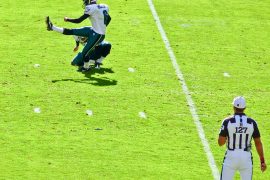
    For example, when the kicker attempts a field goal in an American football game, he is depending on conic sections — specifically parabolas. Does he need to solve an equation that determines the best place for his toes to meet the ball in order to score? Nope. But is it important for him to know that the path of the ball will be a curve, and that the lowest points will be at the points where he makes contact with the ball and where the ball hits the ground.

    That’s upper-level algebra at work. If you were to put the path of the football on a graph, making the ground the x-axis, those two points are where the curve crosses or meets that axis.

    What’s so hard about that?

    Look, we need to adjust the ways we teach math and assess math teachers. I agree that math test scores aren’t the be all, end all. I agree that most high school students won’t be expected to use the quadratic formula outside of their alma mater. (Though algebra sure is useful with spreadsheets!) And I agree that asking teachers to merely teach the concepts — without appealing to students’ understanding of how these concepts apply to their everyday lives — is draining the life out of education.

    And really, how much of the rest of our educational system is directly useful? Do I need to spout out the 13 causes of the Civil War or balance a chemical equation or recite MacBeth’s monologue? (“Tomorrow, and tomorrow, and tomorrow, Creeps in this petty pace from day to day…”) I can say with no hesitation: Nope! But learning those facts helped inform my understanding of the world. Algebra is no different.

    What do you think about the New York Times piece? Do you agree that we should drop algebra as a required course? In your opinion, what could schools do differently to help students understand or apply algebra better?

  • Back to School: Back to Math

    Back to School: Back to Math

    I remember the first week of my fifth grade year. I had a math worksheet for homework, and I was completely stumped.

    “I don’t remember how to do this stuff, Mom.”

    “What do you mean?” she said. “It’s just long division!”

    Yep, in three blissful months of summer vacation, I had completely forgotten to long divide. My mother, a teacher herself, was shocked. Brain drain can sneak up on even the pros.

    Being ready for school is much more than having a new backpack, plenty of No. 2 pencils and a healthy breakfast. Studies show that during the lazy months of summer, all kids suffer from “brain drain” or the loss of learning. In fact, students lose (on average) 2.6 months of mathematical competency in June, July and August. Wow!

    I promise: I will not tell any parents that they should be teaching math over the summer. I’m not big on academically based summer camps (unless kids desperately need remediation or love these kinds of activities). I hate the idea of kids being subjected to flash cards or worksheets when they could be playing at the pool or reading a great book.

    But I do believe — whole heartedly — that parents can help slow the loss of mathematic comprehension with some really simple and even fun activities.

    And that’s what August is about here at Math for Grownups. We’ll focus on parenting, primarily, but I’m guessing that even non-parents can gain some additional understanding from some of the activities I’ll suggest. (No one should feel left out!) I’ll also hit on a variety of grades and ages — from toddlers to college students. And I hope to bring you some Math at Work Monday interviews that will inspire even the most reluctant math student.

    But first, I want to know: What are your questions? What kinds of activities are you looking for? What topics are you having trouble helping your kids with? You ask ’em, and I’ll answer ’em — or at least point you in the right direction (perhaps to my posts at MSN.com’s Mom’s Homeroom).

    So let’s start easing back into the school mindset — so September is not a shock to anyone’s system!

    I want to hear from you! Ask your questions in the comments section or email me

  • Beach Week: Splitting the costs for a week at the shore

    Beach Week: Splitting the costs for a week at the shore

    Each third week of July when I was a kid, my family headed down to Virginia Beach — with around 15 of our closest relatives. Along with sharing a large beach house, each family split the tab, based on the size of each family. No one got stuck with too large a bill and no one got away with a nearly-free vacation. As a child, the process seemed pretty simple, but as an adult, I know there was a lot of thought behind it all.

    The problem is that each family was of a different size. Mine had six people, while my Aunt Dottie only had two. So it wasn’t fair to add up the costs and simply divide by the number of families. Plus, little kids usually slept on the couch or in a sleeping bag on the floor, and they didn’t eat as much. Why should their parents pay as much?

    The key to this system was assigning a share to each person. Adults and teens were one share and kids 12 and under were a half-share. (I think infants were free; they don’t eat much shrimp at all.) Each share covered a place to sleep (or a fraction of the house rental) and food, which went into the kitty. On the first day, we went on a huge grocery store run to purchase all of the food for the week, using money from the kitty. Fresh corn, shrimp and other mid-week food purchases were also taken from the kitty. Any other expenses, like our one dinner out during the week, were covered out-of-pocket. Oh, and Grammy, the matriarch of the family, didn’t pay a dime.

    [laurabooks]

    But how did my parents and the other adults come to those shares? I don’t know for sure, but I can guess, based on what my addled brain remembers and what I would do.

    There were four families, all of the differing sizes. In fact, the family sizes changed from year to year, but let’s look at the last year I went to the beach:

    My family: Two adults, two teens and two under 12s or 5 shares

    Aunt Barb’s family: One adult, two teens and one under 12 or 3.5 shares

    Aunt Dottie’s family: Two adults or 2 shares

    Uncle Bud’s family: Two adults, three under 12s or 3.5 shares

    That means there were 14 shares in all. Once we figured out the cost of a share, we could find what each family owed. Make sense?

    Remember, the costs included rental and food.  Simple, right? In fact, since the money for the rental was due at different times (some upfront and the remaining when we arrived), it makes sense to have two different shares: one for the rental and one for food.  It was the 70s and 80s, but let’s look at today’s costs for this example.

    Rental total: $7,500

    Food total: $1,200

    But we can’t just divide by 4 to find the amount owed by each family. Gotta find the cost of each share. Since there were 14 shares in all, just divide.

    Rental: $7,500 ÷ 14 shares = $535.72 per share

    Food: $1,200 ÷ 14 shares = $85.72

    Note: I intentionally rounded up for a very good reason. It’s better to have too much than too little. If I rounded as I normally would (down for any value less than 5 and up for any value greater than 5), the person paying the tab would be short. Not fair!

    From there, we can figure out how much each family owes — based on the value of each share (rental and food) and the number of shares per family. All we have to do is multiply. Let’s just look at my family:

    Rental: 5 shares • $535.72 = $2,678.60

    Food: 5 shares • $85.72 = $428.60

    That means my family spent a total of $3,107.20 for our week at the beach (not counting travel and other costs). Not a bad deal for a big family!

    How has your family split the costs of a big vacation? Did you use a different process? Buy my books to learn math that you can apply to your everyday activities.

  • Back-to-School Shopping: Applying the order of operations

    Back-to-School Shopping: Applying the order of operations

    Last week, we had some fun with the order of operations at the Math for Grownups facebook page.* Turns out remembering the order that you should multiply, add, etc. in a math problem is a tough thing for adults to remember. Imagine how kids feel! But this is a really simply thing that you can apply to your everyday life — all the while, reminding your kid how it goes.

    First off, here’s the problem that we considered on facebook last week:2 • 3 + 2 • 5 – 2 = ?The answer choices were 38 and 14.I would say that the responses split pretty evenly. Lots of folks chose the incorrect answer first and then realized their mistakes.

    So what’s the correct answer? 14. Why? Because of the order of operations. A lot of us learned the order of operations — or the set of rules that establishes the order we add, subtract, multiply, divide, etc. — with a simple mnemonic:Please Excuse My Dear Aunt SallyORParentheses, Exponents, Multiplication, Division, Addition, SubtractionORPEMDAS

    (Before going further, I must acknowledge that there are some problems with this approach. First off, it doesn’t really matter if you add before your subtract or multiply before you divide. Those operations can be done in either order with no problem. Second, many teachers are approaching this differently, a topic that I’ll explore in September.)

    If you do the operations in the wrong order — add before you multiply, for example — you’ll get the wrong answer. And that’s how people got 38, instead of 14. They simply did the math from left to right, without regard to the operations.CORRECT2 • 3 + 2 • 5 – 2 = ?6 + 2 • 5 – 2 = ?6 + 10 – 2 = ?16 – 2 = 14INCORRECT2 • 3 + 2 • 5 – 2 = ?6 + 2 • 5 – 2 = ?8 • 5 – 2 = ?40 – 2 = 38

    All of this is well and good, but what does it have to do with the real world? How often are you faced with finding an answer to a problem like the one above? And that’s exactly what one reader asked me. So I promised to explain things using a real-world problem.

    Thing is, you do these kinds of problems all day long, without even thinking of the order of operations. And that’s because you’re not writing out equations to solve problems. You’re simply using good old common sense.

    Let’s say you’re going back-to-school shopping with your child. He’s chosen a pair of pants that are $15 and five uniform shirts that cost $12 each. But the pants are $5 off. What’s the total (without tax)?

    You probably won’t write an equation out for this, right? (I wouldn’t.) Instead, you’d probably just do the math in your head or scribble some of the calculations on a scrap piece of paper or use your calculator. So here goes:

    First the shirts: there are five of them at $12 each. That’s a total of $60, because 5 • 12 is 60.

    Now for the pants: all you need to do here is subtract: 15 – 5 = 10. The pants total $10.

    Finally, add the cost of the pants and the cost of the shirts: $10 + $60 = $70.

    The above should have been super easy for most of us. And — surprise! surprise! — it used the order of operations. Here’s how:15 – 5 + 5 • 12 = ?The order of operations says you must multiply before you can add:

    15 – 5 + 60 = ?

    Then you can add and subtract:

    10 + 60 = 70

    There are other ways to set up this equation. In fact, I would use parentheses, simply because I want to keep the pants’ and shirts’ calculations separate in my mind:

    (15 – 5) + (5 • 10) = ?

    The result is the same, because the process follows the order of operations — do what’s inside the parentheses first and then add.

    UPDATE: A reader asked if I’d also show how this problem can be done wrong. So here goes! When you do the operations in the wrong order, you won’t get $70.15 – 5 + 5 • 12 = ?10 + 5 • 12 = ?

    15 • 12 = 180

    That’s more than twice as much as the actual total!

    Try this with your kid. You can make it more complex by figuring out the tax. And there are lots of different settings in which this works — from shopping to figuring the tip in a restaurant and then splitting the tab to dividing up plants in the garden.  Just about any complex math problem that involves different operations requires PEMDAS. And that’s something all kids need to know about.

    When have you used PEMDAS in your everyday life? Did this example spark some ideas? Think about the math that you did yesterday — or today — and share your examples in the comments section.

    *Have you liked the Math for Grownups facebook page yet? What’s stopping you? We’re having great conversations about the math in our everyday lives. And I ask questions of my dear readers. Come answer them!